Communities

Communities

Sign petition now to delete anti-van clause from Police Bill

A new law aimed at protesters will allow police to seize thousands of vans parked anywhere in the UK, other than designated camping sites.
The new Police Bill is aimed at reducing the right to protest in the UK – but hidden away in Clause 4 of the Bill, is a chilling assault on all who live in vans, campervans and other recreational vehicles. Even those who want to stay in a van for a few weeks over the summer will be adversely affected.

Please sign our parliamentary petition, while the Bill is currently being debated in the House of Commons, so MPs can hear direct from voters what they must do to amend the proposed law.

Under the guise of attacking protest camps, the anti-vanlife law threatens anyone who wants to park up for few days or a few weeks on someone else’s land – whether that be a council-owned lay-by, or behind a hedge in an unused field.

Parliamentary Researchers have published a briefing document on “Public Order and Unauthorised Encampments” which makes it clear that the aim of the legislation is to “deter trespassers from setting up an unauthorised encampment,” even if it is for a few people for a few weeks.

At a time when the tourist industry is still hampered by Covid, with camp sites full to overflowing, and a wave of evictions is likely to hit those who have been unable to earn their rent for the past year, this new law is guaranteed to increase homelessness in the UK and reduce the ability of thousands of individuals to live off-grid, while still earning wages through remote working or driving to work.

Legislation details

The 2021 Police Bill is currently going through its Committee stage in the commons. It will strengthen police powers to tackle unauthorised encampments that “significantly interfere with a person’s or community’s ability to make use of land.”  Imagine three camper vans parked on a street. Do they significantly interfere with ability to make use of that street?  That will leave everything to the judgement of local people who want to complain, and local police who have to enforce the law.

The proposed powers will come into effect when:

A person aged 18 or over resides or intends to reside on land without consent of the occupier of the land;
They have, or intend to have, at least one vehicle with them on the land;
They have caused or are likely to cause significant damage, disruption or distress;
Persons fail to leave the land and remove their property following a request to do so;
Persons enter or return to the land with an intention of residing there without the consent of the occupier of the land, and with an intention to have at least one vehicle with them, within 12 months of a request to leave.

This new …

Read More »
Map pointers show where off-grid people live
Communities

Using our Landbuddy Map – new video

Our Landbuddy section is one of this web site’s features most valued by our readers. Now we have released a video to explain how to use it.

It allows people with land to contact people looking for land, and vice versa – there is also a third category for people who just want to help out – perhaps at an off-grid community near them.

Landbuddy is a browsable map – which means you can zoom in on the area you are interested to explore and then find like-minded people who are advertising.

We hope you find it useful. Please contact us with any comments or leave them on the site – and please be in touch with any videos or stills of your off-grid life – send any news stories to news@off-grid.net…

Read More »
Liana Cornell on zoom
Communities

Liana Cornell, actress-activist, on her new Eco-TV series

In real life, the actress Liana Cornell –co- star of the Amazon and Sky TV series Britannia – is living off the grid in Cornwall, UK. She is a strong woman – not afraid to turf her boyfriend out of the house while she carries out our zoom interview. And she plays a strong woman in Britannia – a Roman epic set in 43AD and featuring a number of powerful female lead roles. Recently the 31-year-old sat down to discuss her new eco-documentary series, Refugia, with off-grid.net.

The remarkable pledge Liana has made to herself is that all her acting revenue beyond what she actually needs to survive is ploughed back into causes she believes in – including environmental activism – either through her films, of which more in a moment or the activities of the people she makes the films about.

“I’ve done a lot of environmental work throughout my life, and there was this gap between people doing the work and people who could donate. That was where Refugia comes in.” Its a 3 part series on WaterBear which she wrote, shot and presented herself – made to support and draw attention to some amazing environmental initiatives (until now in Australia but in future around the world).

“I wanted to create something to pull back the curtains and show how they are doing the work – truly good work.” She said. “They don’t have the time and funds” to get more funding.

As well as publicising the characters in her eco-series, she also finances them. you see her presenting cash to individuals she meets during the series. “We have helped to buy back a rainforest in North Queensland and replant it; create a seaweed forest and (sequester) Carbon (by growing) hemp.”

“There are 25 different things we have done with that money.” She is particularly excited about Hemp, which has long been illegal but is now being rehabilitated in the new pro-cannabis climate in America, although not in the UK.

Off-Grid living

Liana is from a well-known acting family in Australia, and was brought up in a coastal rainforest town, with much of the property off the grid. “I enjoy the idea of being off-grid – when we had the fires in Australia my family (in different houses) still had electricity and our own water.”

She told me she had found herself in the UK at the start of lockdown last February 2020 – and would have decided to stay anyway – even without the shoot for Britannia series 3. Her significant other used to live in a van, and he now shares the smallholding they found together in a hidden part of UK’s wildest and most remote county.

Liana’s voyage of discovery filming Refugia was also a voyage of self discovery. “I lay in a sleeping bag with a knife on my chest, coyotes and mountain …

Read More »
Communities

From Burning Man to Burning Van – Nomadland author Jessica Bruder talks to off-grid.net

It seems amazing to the off-grid and van-dwelling communities that a low-budget docudrama about life on the road could be about to receive a large handful of Oscars at the ceremony later this month.

The movie Nomadland even has a scene about how to go to the toilet when you are living in a van with a kindly, elderly lady demonstrating the size of bucket you need.

The Director, Chloe Zhao is the daughter of a Chinese self-made billionaire, and it’s even more surprising that a woman like her would want to make a movie like this.  Zhao’s previous two films were reinterpretations of the classic Western, and “Chloe had been looking to make a movie about young van dwellers”, said journalist Jessica Bruder, author of the book Nomadland on which the movie is closely based.

Bruder is a burner – a regular visitor to the annual Burning Man festival.  She found the theme for her book in the nearby town of Empire, when the sole employer closed the factory, and the community scattered to the four winds. Even the zip code was cancelled.

Her 2017 book was optioned by a couple of producers close to Frances McDormand (of Three Billboards fame), and when they approached Chloe Zhao, says Bruder, Chloe switched her focus from young van-dwellers to the older generation of vandwellers in the USA – the ones who call themselves Snowbirds – because they flock down south together in the winter months.

The film is about the sense of community, and the loneliness, and the constant search for work which makes them analogous to the cow-pokes of old, who would head where the work was.  But for this generation (at least in the movie), the main employer is Amazon, rather than a cattle farm.  And the seasonal work is mainly in the run-up to Thanksgiving.

These modern cowboys and girls are people of what used to be called retirement age – 60-somethings who through bad luck or bad judgement had ended up outside the safety net of pension and medical care – the film is stuffed with characters played by real people who really live on the road, and their stories are mostly to do with divorces that decimated their savings, or an illness that reduced their ability to earn. At that age, it’s understandable that very few opted for this life out of choice. Most feel it’s something they were forced into.  It’s only the younger age groups where two big things have changed. Firstly, the idea of a job for life and a mortgage for life are just not on the radar for many young people.  And just as important, – the technology has enabled a different mindset, mobile technology means you can be warm and comfortable anywhere you can locate some solar panels and a battery.  And the internet means you can work from anywhere …

Read More »
Communities

Barriers to Nomad living and the UK Police Bill

We know a lot of you have concerns and questions about the ways governments are stopping people from living off the grid.  Its a growing problem everywhere, and Covid legislation has made it worse.

In the United States its virtually illegal to live anywhere except a conventional house.  And in the UK, the new Police Bill currently going through parliament will bring in harsh laws against nomadic people. The proposal will impact everyone who is living, or wishes to live, nomadically – by culture, choice or necessity.
 
We are kicking off a write-in campaign to legislators, to bring together those of us who support the nomadic lifestyle to influence their legislators.  Below we share with you what has been stated in the UK legislation which is likely to become law by October 2021. At the end of this post is a template email you can send to legislators and your local police commissioners
Please share this post to inform everyone that could be affected in our community.
 
The 2021 Police Bill currently awaiting its committee stage in the commons will strengthen police powers to tackle unauthorised encampments that “significantly interfere with a person’s or community’s ability to make use of land.”  Imagine three camper vans parked on a street. Do they significantly interfere with ability to make use of that street?  That will leave everything to the judgement of local people who want to complain, and local police who have to enforce the law.
 

The proposed powers will come into effect when:

  • A person aged 18 or over resides or intends to reside on land without consent of the occupier of the land;
  • They have, or intend to have, at least one vehicle with them on the land;
  • They have caused or are likely to cause significant damage, disruption or distress;
  • Persons fail to leave the land and remove their property following a request to do so;
  • Persons enter or return to the land with an intention of residing there without the consent of the occupier of the land, and with an intention to have at least one vehicle with them, within 12 months of a request to leave.

This new offence will be punishable by a prison sentence of up to 3 months, or a fine of up to £2500, or both.

Take action by emailing your local representative (MPs or local Councillors). You can find them and write to them here
Enter your post code on the web page, and write to your MP, and your local councillors, asking them to oppose this bill. MPs can vote against it or amend it before it is passed as it is currently going through Parliament.  Local councils will need to decide what stance they want to take towards nomadic residents.
Local council budgets will be impacted if a van is seized and a family made legally homeless. They may
Read More »
Communities

Van dwelling in rural UK

Fuelled by a desire to break free from mortgages, rent and commuting;  searching for the simple life, in beaches and beauty spots  a largely invisible, group are houseless but not homeless. Adam Butterworth, 26, an aeronautical design consultant, and volunteer at the RNLI, decided to live in a van after falling foul of an unscrupulous landlord. He explained: “I was spending £900 a month, nearly half my wages, to rent a one room studio flat that was filled with damp and causing me respiratory problems.

“Circumstance is the biggest thing. If you can afford a massive house, you always will buy one.

“A van is the most attractive alternative to haemorrhaging money on negligent landlords that couldn’t care less.

Yet financial freedom came at cost: the cold. Despite installing a log burner, wall insulation and getting creative with duvets, he said that low night-time temperatures, especially during winter, were “challenging.”

Without electricity or the internet, the van had taught him to enjoy the simpler things in life. He described how of a summer’s evening he would park facing the South Downs and admire the view with a bottle of locally produced craft beer.

“Where we live, we are blessed with places to go,” he said.

Henry Shanks, another long-term van resident based in Henfield, echoed this when he said that one of the best things about van life was the “constant stimulation from new places. “When you have had enough of that spot, you can just pack up and move along.

“It avoids any kind of stagnation of life.”

Being a musician, the mobility of a van was “ideal” for his career. Clad in lineage oak, it had running water, a kitchen, solar panels, gas, charging batteries and even a piano.

He spent £3,500 refitting the vehicle.

” alt=”” aria-hidden=”true” /When asked if West Sussex was a proising area to live in a van , the answer was “yes and no.

While people were “generally friendly”, there “wasn’t much space to park [and the] infrastructure is not great, recreation spots do not have facilities, like taps, toilets and rubbish bins.”

He also cited new laws aimed to clamp down on illegal traveller sites as “making life difficult.”

In January 2021, the Home Office implemented new ‘anti-trespass’ legislation that can land those camping on private land with hefty fines of up to £2,500 and jail terms.

Growing tired of living with her parents, 25-year-old Laura Bates from Steyning was planning on buying a van to “pay her own way.”

While studying a master’s and working part-time at an engineering firm in Storrington, she explained that “financial reasons” had influenced this decision.

“Trying to rent, save for a mortgage and have any sort of life is pretty much impossible.”

A van was also seen as offering the chance to “declutter” and “simplify” her life.

She said: “we have so much stuff,

Read More »
Judges Gavel
Energy

US Power Grid Closes in on Debtors

The Washington Post reports an unprecedented rise in arrears owed to Utility companies by America households struggling in the pandemic.  Those bills are about to fall due. And the Utilities are planning to collect.

There was a moratorium on Utility bills, but it has now been lifted in most states and now only DC and 14 States still protect consumers from Utility debt collection.

In the DC, area, Fairfax Water is “considering” shutting off service for nonpayment. There has been more than a sevenfold increase in unpaid bills since before the pandemic.

Nationally, As of Dec. 31, Americans owed their gas and electric utilities an estimated $32 billion, according to the National Energy Assistance Directors’ Association, which represents state directors of low-income energy aid programs. In the District of Columbia, NEADA estimates that almost 63,000 households owed about $50 million, while more than 400,000 in Maryland owed $251 million.

“We’ve never seen numbers like this before,” said Mark Wolfe, NEADA’s executive director. “The question is, how do we keep families connected to the grid and in their homes when they don’t have income coming in? . . . We’ve never had a situation where this many people haven’t paid a bill in more than nine months, and we still have a long time to go.”

Washington Gas plans to begin sending shutoff notices to unresponsive Maryland customers after March 31, which could lead to disconnections starting around Memorial Day, the utility said. About 80,000 accounts in the Washington region were more than three months past due as of Dec. 31 — a 30 percent increase from a year earlier.

A coalition of more than 600 racial justice, labor, environmental and religious groups have urged President Biden to declare a national ban on utility cutoffs. The administration recently extended a federal moratorium on evictions through March and proposed $25 billion in rental assistance and $5 billion for home energy and water costs as part of its $1.9 trillion pandemic aid package.

One economist estimated that residential electricity use spiked 10% on average between April and July 2020, leading to households spending nearly $6 billion on extra usage.

Read More »
Communities

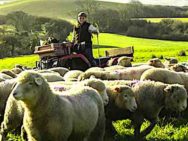
Schoolboy sets up sheep business after renting neighbour’s land

A 13-year-old entrepreneur schoolboy has set up a farming business after renting a neighbour's land to rear his flock of sheep.  Young farmer William Banham fed, watered and wormed eight animals before taking them to be slaughtered and selling on the produce.

William, of Long Bredy, Dorset, who’s not from a farming background, started out at the age of six, learning the ropes and determined to be his own boss.

He was just 12 when he found a patch of land to start ‘Will’s Lambs’. When he’s not attending Sir John Colfox school, he braves all weathers to single-handedly feed and water his flock.

William said: “I was determined to work for myself, not for somebody else.

“I don’t think any of my friends have their own businesses – sometimes they joke about it, but I think mostly they’re quite impressed.”

He doesn’t come from a farming family, but has helped out on a farm from the age of six. And while many adults are squeamish at the thought of where meat comes from, Will’s attitude towards the realities of life is mature beyond his years.

“I know I’ve given them the best life possible so I wasn’t too sad about taking them to the abattoir. You just have to accept that’s how it is.

“I also want to make sure every part of the animal is used, and will be selling the sheep skins.”

His mother Caroline said: “William would have me drop him down there at 6am – he’d stay there for 12 or 14 hours if he could.

“During lockdown, every morning and afternoon he’d have to go and check the sheep. “But he’s never failed to get up, he’s been really responsible.”

Feedback from customers has been ‘amazing’, according to Caroline.

“Everyone has been in touch to say it’s a great-tasting product. Will’s just got this amazing spirit, he gets things done.

“He’s quite self-motivated when he wants to do something. We’re really proud of him, and the fact he’s done everything himself.”

Read More »
Nomadland still
People

Interview with Frances McDormand on her new film – Nomadland – UK Exclusive

Oscar winning Frances McDormand is the most fascinating and enigmatic actor on the A-list right now.  Having her pick of the most heavily funded movies, its revealing she chose Nomadland (see the brilliant trailer here)  – which she produced as well as starring in – a relatively low budget feature about the Snowbirds – mainly older Americans -who travel the country in RVs and other vehicles, looking for work and sun.

The film opens February 2021, and has already received once-in-a-decade reviews at film festivals.  Chloe Zhao‘s ‘‘Nomadland” is that rare creation that not only lives up to the hype but also makes you forget about it, ” said one reviewer.  “This is a gentle, humane and dizzyingly poetic ode to the people on the fringes of American society, the ones who choose to wander and drift across the great Western landscape,” says another. “Frances McDormand gives a performance that is so alive and unguarded that it feels like non-fiction.”

It’s relevant that 63-year-old McDormand is one of the few in Hollywood who manages to preserve a normal life outside the film world, appearing in public only rarely – usually  to promote a film – but only if she believes in it.  Nomadland is a passion project for McDormand, and for Director Chloe Zhao.  “As I get older, the most important thing for me became the environment where my cellular structure feeds. And in that sense, it has nothing to do with bricks and concrete. I love the land.”

McDormand spoke about her similarities to the person she plays in the movie, Fern – a 60-something woman searching for work and identity and opening up to the possibilities of life on the road.

“It’s interesting, because the biggest difference between me and Fern is that I left my house, left behind my working class life when I was 17, and never came back. But in the film, Fern makes a very important decision to align herself with a man who fell in love with her,But she doesn’t create her own destiny until she was 61. I mean, she starts at 61, which I had started at 17. That’s why I don’t think her life is so much like mine.”

“Well, I’ve been practicing the idea of pretending to be someone else for 38 years now. I think there’s always a part of every character which has some resemblance the actor’s life. And in this case, it’s much closer. But I don’t know if I can say she’s just like me.”

As a child McDormand lived a nomadic lifestyle – travelling with her parents.  Is this relevant to the nomadic lifestyle portrayed in the movie?

She was adopted with her sister, by the McDormand family, and together lived in Georgia, Kentucky, Tennesee and Pennsylvania.  Frances won a place at the prestigious Yale Drama School. It was there …

Read More »
Communities

In Israel, a failed town finds new hope – off-grid

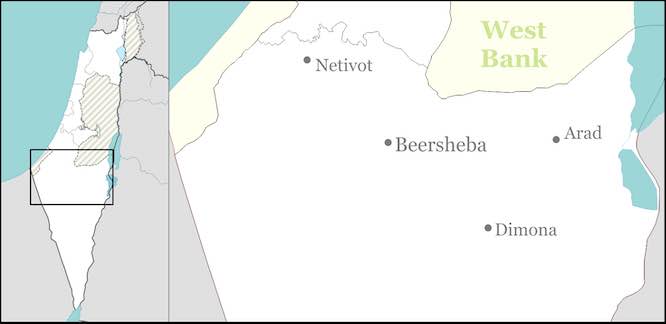
A disused factory that once symbolized the dismal economic failure of Dimona in southern Israel’s Negev desert, has metamorphosed into a 21st century manufacturing hub for the country’s first off-the-grid neighborhood.

Since the spring, the Ayalim Association, known for the student villages it has established throughout the country over the past 18 years, has been producing parts for prefabricated homes that are then put together in a new temporary neighborhood that is already housing 18 families and 10 single people — the first residents of Ayalim’s new and ambitious green, urban initiative.

Benny Biton, mayor of this remote, largely working-class city — best known for the nuclear reactor on its outskirts — has enthusiastically embraced the idea of offering well-educated young people from within and outside of Dimona the chance to realize their sustainable dreams .

The first residents of the still barren-looking neighborhood due to be renamed Shahak Heights, after the late former army chief of staff and politician, Amnon Lipkin-Shahak, are paying a subsidized, monthly rent of NIS 1,800 ($560) for small, boxy homes with one or two bedrooms and balconies that look out over spectacular views of the rolling desert hills.

“In America, people pay millions of dollars for views like these,” Biton chuckled.m

Eco-villages: Pioneering, 21st century style

Shahak Heights — to be formally opened by President Reuven Rivlin in mid-January — is the first of a series of planned temporary neighborhoods that are not connected to the urban infrastructure that provides water, sewage and electricity, instead relying on eco-friendly solutions where possible. Not only is this increasingly feasible thanks to advances in green technology. It is also far cheaper.

The whole community of Shahak Heights, into which residents began to move a couple of months ago, cost only NIS 3 million ($930,000) to build, slightly more than the average cost of a single apartment in Tel Aviv.

“It’s sustainable, limits the damage to nature and is affordable for young families,” said Matan Dahan, who co-founded Ayalim in 2002 with the goal of reviving the Zionist spirit of community building while bolstering underserved areas of the country.

All the prefab structures’ roofs are covered in solar panels, which supply electricity during the day. Computers designed by US electric car and clean energy company Tesla measure the amount of excess energy produced and channel it to batteries, which supply electricity at night — but only according to each house’s need.

A diesel-run generator has been installed to charge the batteries if they fall below 20% and the expectation is that the generator will run for an average of 15 to 40 minutes per day during the winter, using around three liters of diesel.

Solar energy system supplies 250kw

To help cut down on electricity usage, cooking ovens, stoves, and heating/air-conditioning systems are being run on gas supplied in canisters.

Water is currently being transported into storage containers …

Read More »
Communities

Off-Grid, Socially-Distanced, Christmas Gift Solution

Celebrating its second Christmas, Ungifted allows you to take part in the Secret Santa tradition, without being a part of a mass-produced junk problem that’s harming the planet.  And the online service is perfectly positioned to bring families together over the upcoming, self-isolated festive season.
More Mugs anybody?

While many of us are still working from home, Secret Santa traditions are still set to go ahead this year, albeit via Zoom, and many are bracing themselves for another cheap, useless gift from a colleague.  Instead of giving each other unwanted stuff, the Secret Santa service from Ungifted offers surprises which are then revealed at an online Unwrapping party. Keep an eye on your emails to find out who you’ve got.

Suggestions include curating Spotify playlists or a month or memes; sending motivational memes for a month; watching and reviewing movies on behalf of friends; scheduled coffee-based (virtual) chats, sharing spooky stories or committing to a year of loyalty in the form of ‘Likes’. You can also create your own gifts, perfectly tailored for your office family. The gifts are unveiled via a shared-screen to mimic the real-life experience as much as is possible.

Ungifted founder Naresh Ramchandani wanted to transform the Secret Santa ritual and get away from “the mounds of novelty office tat we’ve bought each other over the years. Most of those unwanted gifts has ended up in landfill.”

Bad Santa

He  was inspired by horror stories of the worst secret Secret Santa gift ever received. :

*“Condoms. From the MD. Mortifying!”

* “A mini hot water bottle with Anne Frank on the cover. I had no words!”

*“Sheep slippers – because I’m Welsh. They were too small”

*“I’m over sixty and someone bought me an edible thong.

“While our motivations are worthy,” said Ramachandi, “we still think Ungifted is a more fun and meaningful option, and everyone who signs up could actually get something they really enjoy this Christmas.”

How does Ungifted work?

Step 1: Sign up your team or group of friends, and their secret sorter will do its matching-up magic

Step 2: Choose from a range of zero-waste, creative gifts (or create your own) and write your Ungifted message

Step 3: Set the date for your shared-screen gift reveal, and when the time comes, unmute your mic and let the fun begin.


To find out more about Ungifted, head to https://ungiftedsecretsanta.com

Read More »
Communities

Shepherd’s Huts – 9 Remote Retreats for an Off-Grid Break in the UK

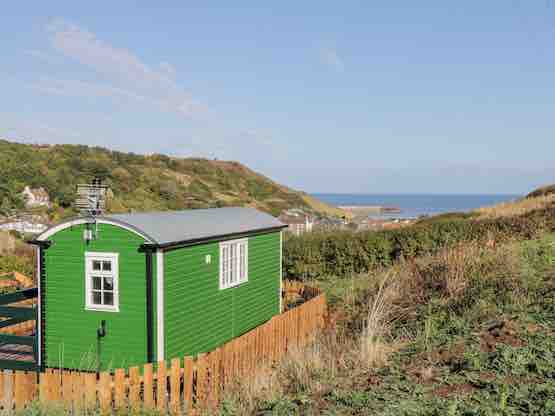
Shepherd’s Hut stays are becoming popular as the multiple lockdowns give us all a taste to break free from TV, electricity and even buildings with roofs.

Shepherd’s Huts are quirky getaways that have long been a hit with those looking for something a little sturdier than a tent for camping – you get all the comforts of a bed, kitchenette and bathroom, while still getting to enjoy remote landscapes.  They tend to be popular with couples, but there are also some properties for families if you do want to bring the kids on an adventure.

To give you a helping hand, we’ve rounded up some of our favourite Shepherd’s Hut stays across the UK worth having on your radar…

1. Rock View Shepherd’s Hut, Devon

Hidden in the woodlands three miles from the village of Gunnislake, this cosy hut has everything you need for a comfortable stay  -there’s no TV and no access to Wi-Fi.

Spend the day exploring the landscape there are some nearby market towns.

How much: Prices from £249 for seven nights with Sykes Holiday Cottages. Sleeps two people. Find out more here.

2. The Hot Tub Hideaway, Brecon Beacons

As the name suggests, this charming hut offers a luxurious perk for guests; an outdoor hot tub with views of the breathtaking scenery.

Located in a private meadow, you’ll get exclusive use of the hut and its hot tub, while other highlights include a wood burning stove inside, and a large fire pit if you do fancy some al fresco dining. There’s a separate hut for the wet room and toilet.

How much Prices from £409 for three nights with HolidayCottages. Sleeps two people. Find out more here.

3. Maylies, Northumberland

If you’re looking to get away from the daily grind, Maylies could be just the spot. For a start, the outdoor bath is the stuff of dreams with views of the sprawling countryside, while inside you’ll find two bedrooms with cosy beds, as well as an open plan kitchen and lounge.

The hut actually sleeps up to four people, so it can also be ideal for friends or families looking to have a fun countryside escape together.

How much Prices from £200 per night with Canopy & Stars. Sleeps four people. Find out more here.

4. The Happy Hare, Dorset

Couples after a romantic getaway surrounded by picturesque landscape won’t be disappointed at this quirky spot in Dorset.

The Happy Hare offers an idyllic camping break from the outdoor seating area and fire pit to the hot tub. Inside the hut expect modern and sleek interiors, including a double bed and a kitchenette with everything you need for a hearty post-countryside-walk meal.

How much Prices from £80 per night with Canopy & Stars. Sleeps two people. Find out more here.

5. Shepherd’s Hut Avon Farm Estate, Bath

Read More »