

Law & politics

energy-companies-buringing-money-while-micro-generators-make-money
Law & politics

HOW TO DISRUPT THE UK ENERGY INDUSTRY – AND KEEP THE LIGHTS ON

A reckoning is due for Great British Energy – the UK government’s nascent £8.3b industry accelerator. Announced as the centrepiece of the UK “growth mission” its launch was accompanied by the news that it had spent £640m buying the nerve centre of the National Grid – the control room that apportions energy across the country on a live daily basis. In 2035 we may look back on that deal and think “only £640m…”  British energy Minister Ed Miliband has firm plans to waste billions by then – on carbon capture and Contracts for Difference, as well as reparations to low-lying islands in the Pacific, and thousands of hotel nights spent attending Cops30-40.

Literally anything could happen to the UK energy supply this winter, and almost all of it is bad.

But there is also something we can all do in our individual communities – to prepare for possible power cuts, this winter or any other winter.

After all, every household in the UK spends an average of £1700 a year on energy.

Ed’s big problem is that he has raised expectations.  He announced that not only will he solve the nation’s energy conundrum, but that he will also save money while doing it, keep the lights on, build 1.5m new home and launch a new global Britain on the back of it.

The energy industry, and the entire country, is waiting for action.  But Britain can never be an energy super-power, and Ed must know this.

Consider the facts – Annual GB electricity consumption is 292.7 terawatt-hours (TWh) of electricity in 2023, about the same as Texas, a vast state with multiple connectivity issues in outlying areas. The UK has a small, compact grid, which is currently undergoing major re-engineering for decarbonisation.

Electricity demand is forecast to grow at 5% a year, but generation is not increasing at the same pace until 2029. The maximum power to be provided by two new nuclear plants planned (if they are on time it would be a first) is 56TWh. And Ed wants sharp reductions in oil and gas for electricity production. That produces a shortfall of another 50TWh by 2029

Then there is a 10-yr waiting list for new housing estates to get on the grid. That’s right – ten years from time of application to secure a supply from the grid.  Yet Labour says it will build at least a million homes in the next 4 years. How will it power the new homes? There is also a 10-yr waiting list for new solar farms to go on the grid, due to structural problems that require hundreds of miles of new cabling and pylons.   Quite simply, the grid is not fit for purpose, and nor is there the slightest chance it will be re-engineered until well after 2030. Nevertheless, the government says it wants to decarbonise the electricity system by 2030.…

Read More »
dynamic-duo-ed-milliband-angela-rayner
Energy

Memo To Rayner & Milliband – You Should Talk About Energy for Housing

The UK Government last week laid out the domestic plan for its first year in office -prioritise housing and clean energy, in order to kickstart growth.

The duo in charge of these policies – Angela Rayner (housing) and Ed Milliband (energy), did not co-ordinate their announcements last week, and there is a feeling in energy circles that both policies may fall flat for the same reason – delays in generating clean energy to the places where housing is most needed.

Housing and energy are closely connected – you cannot build new communities until the power supply is in place. We know that there is currently a 10 year wait to connect new housing estates to the grid in some parts of the country, and a 10 year wait to connect a solar farm to the grid in others.

The government also launched its vehicle for its energy initiatives last week, Great British Energy, to be run by former Siemens executive Juergen Meier. it is going into the business of picking winners – but energy for housing does not appear to be in the list. £8.5b has been announced for it to co-invest with big industry players in the next generation of wind and solar farms. But these projects take years to start generating power. It took the best part of a decade to build the Hornsea 1 Windfarm, and that was AFTER planning permission was granted in 2014. So reforms to planning permission on which the government is currently consulting are unlikely to make much impact.
And the recent history of government energy deals shows the Civil servants charged with negotiations were ham-fisted and outmanoeuvred at every turn. The UK chair of French energy company EDF, Alex Chisholm, previously ran BEIS, the department that struck the deal for EDF to build a new nuclear power station in Somerset., as reported in the Guardian. “The agreement was made in 2016 with UK bill payers bearing the costs, which soared from an estimated £18bn to at least £31bn…. it is due to be completed in 2031 – about 14 years after EDF said it would be up and running.” In 2023, EDF was the leading company in the wholesale electricity generation market in Great Britain, with a share of 18.5 percent. The UK branch of the German company RWE ranked second last year, with a market share of approximately 17.5 percent
Data centres and EVs will gobble up all the new energy the grid can produce in this country for the next ten years.
Where does that leave the new housing starts that are so badly needed? How will they get their energy this year?
The big energy consumers will always need the grid, but for at least some new housing estates, electricity could be supplied from small local microgrids that do not need to be hooked up to the main grid …

Read More »
Communities

UK Energy Policy – No Boost For Prosumers

London – 29 March – The UK government will reportedly unveil new proposals on “Energy Security Day” tomorrow, aimed at hitting net zero by 2050. Sources say Prime Minister Sunak will unveil plans for more oil licenses and Carbon Capture schemes, and a revamped net zero strategy in Aberdeen, the UK’s oil capital. The event has been renamed from “Green Day” to emphasise a reduced commitment to carbon reduction in the short term.

Energy Secretary Grant Shapps will announce a consultation on a new system of “carbon border taxes” to protect UK manufacturers from countries with lax environmental rules, but this will hobble the British economy unless it is accompanied by subsidies for the UK’s own local battery production plants and solar panel manufacturing.

Off-Grid.net has come up with detailed plan to launch initiatives in this area, but the UK government is ignoring the role of households in the energy security plans and focusing solely on “Big Energy.”

Off-Grid.net calls on Shapps to recognise that 100,000 local projects serving a few hundred homes each can produce far better results, far more quickly and easily, than a handful of huge projects serving millions of homes each.

The government’s carbon border taxes will initially target energy-intensive products like batteries and solar panels, as well as hydrogen from non-EU countries, to ensure a “level playing field” for domestic producers and encourage other countries to switch to renewables. But there are no domestic producers of solar panels or batteries.

The government will also offer grants worth hundreds of pounds to middle-income households to make their homes more energy efficient under the new “Great British insulation scheme”. That is a welcome contribution to reducing consumption. But energy production is being reserved for the larger players, companies like National Grid, which is slowing down the race to Net Zero in the same way BT slowed down the the rollout of high-speed fibre and set back the UK Internet by a decade.

The Financial Times reports that a price floor could be imposed for the windfall tax on oil and gas producers, meaning that energy businesses will be guaranteed no windfall tax if the price drops below a certain level.

North Sea firms have expressed concern around the lack of a price floor for the 35% levy – meaning firms would still be facing a total 75% tax rate if oil and gas prices drop.

Imposing a floor has been a key ask of trade body Offshore Energies UK.

It is expected that an announcement on Carbon Capture and Storage (CCS) could also made, according to the Guardian.

That comes as ministers have promised an update on the Track 2 funding – which the Acorn development in Aberdeenshire is banking on – before the end of the month.

It also comes a week after Jeremy Hunt announced a £20bn package for the technology in his budget.…

Read More »
Upper Coquetdale in the Coquet Valley, Alnwinton
Communities

Uk’s Most Unspoilt Area To Be Wrecked By Utility Company Plans

Plans have been lodged that could see properties in one of Northumberland’s most rural areas connected to the electricity grid for the first time. There are believed to be around 350 families across Northumberland living off-grid, with no utility bills, and able to enjoy the night sky with no light pollution.

Lobbyists from the power company say children are bathing in streams and doing homework using headtorches, while people struggle with basic household tasks. The local council and the local Utility company are conducting a PR blitz to persuade residents to go along with the scheme. Families are being quoted thousands of pounds by power companies to be connected to the grid. Write to us if you oppose the scheme – email: news@off-grid.net

Northern Powergrid yesterday outlined the plans that could see mains electricity delivered to properties in Upper Coquetdale in the Coquet Valley, Alnwinton.

The firm is looking to install overhead lines that will be intercepted by interconnecting underground cables in the Northumberland National Park, which will secure an electricity supply to off-grid properties and three emergency cell masts.

The plans have been lodged with Northumberland National Park for consultation before being submitted to the Secretary of State of State for Business, Energy and Industrial Strategy for a final decision.

The application has received a few letters of support with one person writing: “I thoroughly support connecting electricity to homes in the Coquet Valley, my family have farmed there for over 60 years and have had to manage on a diesel generator and power minder batteries, which is ridiculous in this day and age ,the cost of running generated electricity is astronomical.

“My family have been campaigning for mains electricity for many years, I hope at last this will be happening, although I will not benefit as I have retired from the business.”

Another wrote: “There are many homes across rural Northumberland that were never connected to the mains electricity grid many decades ago because it was just too expensive.

“I urge you to approve this scheme, our rural community deserves to be on grid after all these years.”

Rothbury councillor Steven Bridgett said residents and organisations have been working for many years to address the issue.…

Read More »
Energy

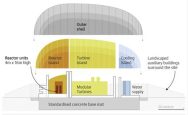
World’s First Micro-Nuclear Greenlit in Canada

In January, GE Hitachi signed a deal to build the first small modular reactor in North America, agreeing a deal with authorities in Ontario, Canada.

GE is among dozens of companies around the world with designs for small, factory-produced reactors. The theory behind mass-producing them is that development costs can be spread over many units to lower costs.

They are also cheap enough for private companies to buy, with the smallest versions being touted as a prospect for powering container ships.

Early leaders like Rolls Royce are falling behind because of slow Government decision-making on SMRs and their higher-tech cousins advanced modular reactors (AMRs), which are a few years further away in deployment.

Some developers have abandoned hopes of taxpayer funding, but without guidance from the regulator about how far off design approvals may be, and a site to show that their technology works, lenders are skittish about committing to big projects.

Without these assurances, orders and jobs are on the line. However, the industry is hesitant to attack governments openly, given the requirement to win Government approval (and funding). Governments tend to favor home-grown companies, whihc makes the GE deal suprising.

In the UK, for example, foreign-controlled Rolls Royce still has the inside track – a government spokesman said: “Small modular reactors could play a vital role in our nuclear programme as we work to increase our energy independence and security, reducing our reliance on fossil fuels and exposure to volatile global gas prices.

“The Government is investing in these new technologies through the £385m Advanced Nuclear Fund including £210m towards the Rolls-Royce SMR programme. We will announce plans for the set-up of Great British Nuclear soon, and we are committed to backing it with appropriate funding to support projects and investment.”

Tom Samson, chief executive Rolls-Royce SMR, said: “We have over 600 members of staff in the UK, dedicated to bringing our technology to market at pace – a British solution to a global energy crisis.

“Rolls-Royce SMR has called for rapid progress from the Government and we welcome the adoption of that principle in this process.

“We look forward to working collaboratively with Government and Great British Nuclear to realise their ambitions as quickly as possible.”…

Read More »