

Be Our Guest – Food Preserving Part 2
In Part I, I covered canning and smoking as food preservation methods. This article takes a look at refrigeration and dehydration.
Freezing and refrigeration is the easy way to preserve food compared to some other methods. The only problem is, once frozen or cooled it has to stay that way until consumption.
Before the wonders of electricity and modern technology, how did people do this?
On farms and in small villages it was common to have a spring house which would provide natural refrigeration. A stone building with troughs dug into the ground on which the house stood would be built over a natural spring. Water from the spring would flow through the troughs and jugs of milk or other produce could be placed in the channels. These would then be kept cool as the water flowed around them. Ledges and hooks would also be provided in the spring house, to hang meat and vegetables in a cooler environment.
If the house wasn’t built over a natural spring, water could be redirected from a nearby creek. Initially some spring houses were made of wood, however this was prone to rotting. Stone therefore is the better material, not only does it hold the cold better but it won’t decompose or decay with time.
Fancy building your own spring house? You can find out more at Bright Hub.
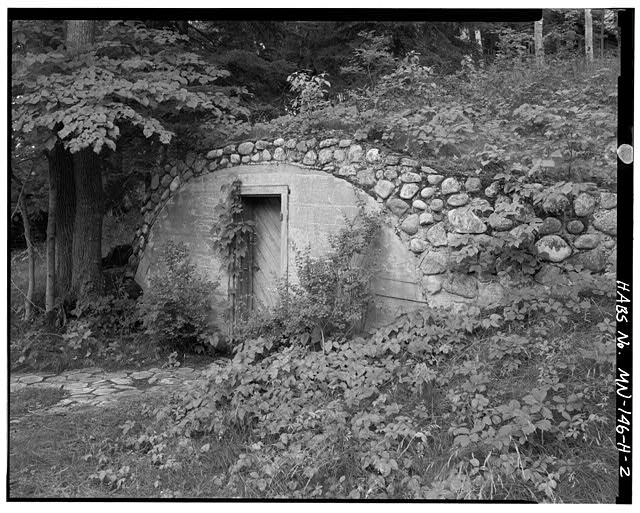
Another option which was used before electricity and still used today is root cellars.
These underground rooms stay cool in the summer but above freezing in the winter – perfect for fruits, vegetables and canned goods. The cool temperatures prevent bacterial growth and the humidity prevents withering. Ideally the cellar will have temperatures between 30 and 40 degrees Fahrenheit, have low levels of sunshine, good insulation from materials such as straw or soil and be easily accessible.
Root cellars come in a variety of forms from walk in rooms to putting trash cans in the ground to create a “mini” cellar. If you’re on a tight budget, take a look at this video by the Walden Effect, who made a root cellar out of an old refrigerator.
Speaking of refrigerators, if you want to be a bit more tech-centric, then there are various options for off-grid cold food storage.
Propane fridges have been a staple for many RV owners and in off-grid homes. Some models can run off propane, DC or AC, making them more flexible. Although these appliances are good for keeping food cold and frozen with ample storage, they do require some maintenance and if they break down can be expensive to repair. Not only this, propane may be unavailable or very expensive to get hold of in certain areas and some propane fridge models can be extremely “fuel hungry” – not exactly the most economical option. There is also an initial investment of over $1,000. Take the