

offthegridnews.com

off-grid, desert village, platform, technology, Israel,
Community

Experimental Tech in Desert Village

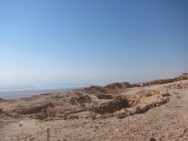
An off-grid desert village in Kibbutz Ketura, Israel is being used as a platform for tech companies and entrepreneurs to develop innovative off-grid technologies. The village was set up in 2014 via a collaboration between the Arava Institute for Environmental Studies and Eilat-Eilot Renewable Energy Initiative. The project is aimed at developing off-grid solutions for undeveloped areas, encouraging experimentation. It is the key step between development and implementation in areas where whole communities have no grid access.

There are four key areas for off-grid living which are currently being developed and worked on in the village.

Desert Village Building:

There are three types of structure in the village, based on existing building types within in off-grid communities. The rural structure is based on a traditional design and has a thatched roof to help with ventilation, but lacks natural light. Therefore, to adapt it, the village has added windows to the buildings to provide natural light for reading and other activities, as well as providing more ventilation.

The urban structure is based on a design most commonly seen in urban slums. The modifications to this design are the double roof structure and wall insulation. The first roof layer is made of palm leaves for ventilation purposes and the second consists of metal for protection against the rain. Plywood walls have insulator material like sheep wool within the wall to keep thermal balance in the building. The structure is mainly based on plywood which is low priced and the design is simple to construct.

Finally, the earthbag dome design was first developed in the 1980s, using soil sacks to construct huts. The bags of soil provide a rigid, stable structure with a balance of temperature. There is no need for deep foundations or a separate roof structure, due to the dome shape. These buildings are rapid to construct, simple and cheap.

Energy:

The desert village has some different energy technologies within its boundaries. The Kalipack solar suitcase can produce energy from three sources – electricity, a vehicle or solar power. Storage takes the form of a lithium ion battery and can power a small refrigerator, laptop or lighting, amongst other things. The village also has a small domestic biogas system which has efficient waste disposal whilst producing methane gas for cooking, water heating and home lighting.

LuminAID have introduced some chargeable and easy to use solar lighting. But GravityLights have also been developed at the village. These work by combining kinetic energy with potential energy. A weight of some sort is elevated and connected to a pulley system which powers a generator. The result is a light which is five times brighter than a kerosene lamp. Surveys with families using the lights have been very positive so far.

Water:

Clearly something that is very important in every community is clean water. The desert village has a solar water distillation system developed …


Read More »
Nipton Hotel
Community

Where to drop out in the USA

Does your life ever get you to the point where you want to just drop out and leave the system behind? Here are four options for starters. There are many more – you can hook up with others using our free classified ads service or posting on our searchable map – landbuddy.com

NIPTON
In the Mojave desert town of Nipton, the spirit of the western frontier has transformed a forgotten outpost into a self-sustaining ecotopia where the dream lives on.
A former long-haul trucker with a bowie knife strapped to his hip, Jim Eslinger serves as caretaker and hotelier of Hotel Nipton, its existence marked by a wagon-mounted sandwichboard that reads:
WELCOME TO NIPTON, CA B&B HOTEL & ECO-CABIN STORE, RV PARK & CAMPING RESTAURANT
Eslinger added a cluster of tented eco-cabins, outfitted with platform beds and wood-burning stoves.
A faded settlement of about 20 permanent residents, the town consisted of an assortment of structures, some solid and occupied, some as vacant and splintered as an Old West movie set. Computer Gamers might know Nipton for its cameo in Xbox 360’s Fallout: New Vegas, where it played a post-apocalyptic wasteland infested by giant mantises. But otherwise it was your typical drive-through desert community, fixed at the crossroads of Nowhere Special and Wherever You Were Going when Eslinger arrived. There was one notable exception: Nipton, and everything in it, was for sale.
There a cluster of tented eco-cabins, outfitted with platform beds and wood-burning stoves. Popular with today’s 30-something crowd, the cabins were based on a design by Frank Lloyd Wright. There is a solar plant, which produces 40 percent of the town’s power. It sits on the outskirts behind a barbed wire fence, its rows of reflecting harvesters mirroring the sun as it moves across the sky.
There is a hydrogen system in order to store clean energy.
The town of Nipton is for sale.

KALANI HONUA
A solar-powered village tucked away on 120 acres of lush Hawaiian rain forest sounds a lot like Lost: Season 3, but it’s actually an eco-minded retreat center in one of the best areas in the state to drop out. Here in the heart of the Big Island’s Puna District, residents and volunteers are busy harvesting papaya and avocado, cooking farm-to-table meals, and taking classes in hula and tauhala weaving. Book a night in one of their cottages, pop in for a gong bath, or grab some honey produced from the on-site apiary. From $95; kalani.com.

SYNCHRONICITY
There’s no rule that says you must drop out in a rural location with hippies running nude through the woods. Case in point: Synchronicity, a creative community set in L.A.’s bustling Koreatown. Though a small group of artists calls it home, the door is always open to guests, who can stop by for weeknight dinners and a monthly art salon. There’s even a private room …

Read More »
Sun tax, Spain, Off-grid, solar panels, tax, grid
Solar

Spain’s Sun Tax to be axed

In October 2015, Spain’s Council of Ministers approved a controversial tax on those using electricity produced by their own solar installations. However, a new government says solar panel owners could soon see the back of the so called sun tax.

What is the sun tax?

This legislation causes those with self-consumptive photovoltaic systems to pay the same grid fees as those without solar panels. This covers the power contracted from an electricity company. But they also have to pay a second “sun tax” which means solar panel owners pay for the electricity they generate and use from their PV systems, even though it doesn’t come into contact with the grid.

There are other facets of the legislation which also caused more outrage. Photovoltaic systems up to 100 kW are not able to sell any excess electricity they produce. Instead, they must “donate” the extra to the grid free of charge. Systems over 100 kW must register if they wish to sell the extra electricity. Community ownership of PV systems, of all sizes, under this legislation is prohibited. Not only this, but the legislation is retroactive; meaning installations prior to the introduction of the tax must comply. If the conditions are not met, then the PV system owners are subject to a penalty fee of up to €60 million ($64 million). To put this in perspective, this is twice the penalty of a radioactive leak from a nuclear plant. Unsurprisingly, this caused outrage.

Exceptions to the tax

There are some circumstances where the tax does not apply. Fear not off-gridders, this tax is only for those connected to the grid. If you run an off-grid system then no grid tax needs to be paid at all. Installations smaller than 10 kW are also exempt from paying the second sun tax. The Canary Islands and the cities of Ceuta and Melilla (Spanish territories in Africa) are also exempt from the second tax. Mallorca and Menorca pay the second sun tax at a reduced rate.

The Spanish government defended the legislation by saying the fees contribute to overall grid system costs. However, the Spanish Photovoltaic Union (UNEF) pointed out how uneconomic the new law was. Their spokesperson stated, “Each kWh imported from the grid by a self-consumer will pay double the tolls compared to a kWh imported from the gird by another consumer.”

Change on the horizon

The current legislation is an unnecessary burden placed upon solar consumers who want to be more economical and environmentally friendly. This has been recognized by opposing political parties and other unions and consumers. The political party which initially brought in the sun tax is now a minority. Therefore, there is now the opportunity for all opposing parties to remove this expensive and impractical legislation.

In January 2017 a law proposal was registered in congress, beginning the process of the sun tax removal. The urgent changes …

Read More »
Bottled Gas is a gas
Community

Calor Gas offers up to £5,000

Bottled Gas supplier Calor Gas is offering funding of up to £5,000 for schemes that will improve life in off-grid communities.

Calor Gas spokesman Paul Blacklock said: “We provide energy to homes and businesses and understand the challenges country living can pose, especially when it comes to community facilities. Projects we support could be anything from community centres, village halls and sporting venues to youth clubs and Scout groups, or they could be initiatives to support the elderly.

“Entries open on April 3. We will be encouraging the whole community to get on board by voting for their favourite.”

Calor Gas Limited (Calor), a subsidiary of SHV Holdings N.V. is an energy service company that provides liquefied petroleum gas supply and other energy services. The company offers products and services such as home energy supply, boiler and heating services, gas bottles, Calor liquefied petroleum gas autogas, and renewable energy for residential customers. It offers LPG solutions for FLT, fork lift truck training, heating solutions, radiant heating, warm air heating, wet system heating, water heating, farming wit LPG, and servicing and maintenance, among others to business customers. The company also sells gas cylinders, outdoor living, commercial appliances, in the home, and solid fuel pallets. Calor is headquartered in Warwick, the UK.

Calor Gas Limited Competitors include

Alpha Petroleum Resources Limited

FCL Petroleum Limited

Gasrec Ltd

Linton Fuel Oils

Sonatrach Petroleum Corporation

BOC Group Limited

 …

Read More »

App uses social media data to make avoiding people easier

A new iPhone app allows users to harness the power of social media to become as anti-social as possible.

Cloak lets users view a map with location data taken from their friends’ Foursquare and Instagram posts in order to avoid contact.

Users can flag specific friends — or all of them — and will receive an alert if they’re nearby. The warning distance ranges between within one block and 2 miles.…

Read More »

Composting toilets – Everything you wanted to know,

For users seeking a toilet for an off-grid site rather than one which will clean itself and lower its own seat, a composting toilet could be just the ticket.

Modern composting toilets – also called waterless toilets – originated in Sweden in 1939. Engineer Rikard Lindstrom was looking for a toilet that wouldn’t pollute the Baltic Sea near his home in Sweden. He launched Clivus Multrum in 1962, and the company and others like it would eventually spread to the United States in the early 1970s. Today, composting toilets are used in a variety of home situations. …

Read More »