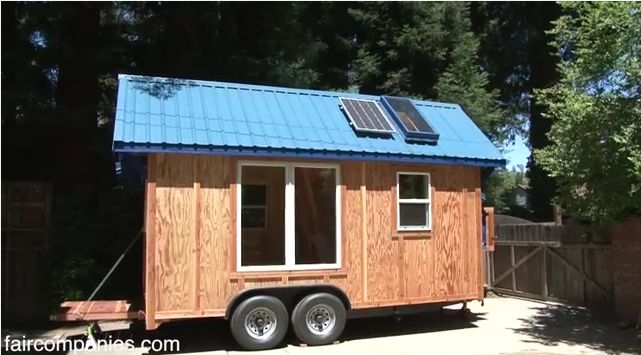
When Joel Fleck moved home to after college, he wanted his own place, but he didn’t want to pay the steep Sonoma County rents, so he decided to build his own tiny home on a trailer. Inspired by wee house pioneer Jay Shafer (also from Sebastopol), Fleck bought an abandoned trailer from a neighbor for $300 and began building without plans.
To make up for his lack of construction experience he “over-engineered” the build, though the entire build cost him just $25,000. He found a lot of salvaged material and this didn’t include the cost of his labor of two years. Many of the details are custom hacks, like the swinging ladder up to his loft crafted from steel cables, chunks of 2 by 4s and “in order to eliminate the swaying I made it so it clips into the floor on these little airline clips”.
Fleck is 6’4” so much of the home was custom-built for him. He gave himself just an inch or so clearance in his kitchen and a few inches while sitting in his lofted bedroom. His bathroom is a tighter fit: the shower is just 6’2” so he had to build a special box above it to fit his head. Fleck doesn’t see his 150-square-foot home as a sacrifice, but a right-sized home and study space.
This tiny home on wheels packs real stairs, not a ladder, 2 lofts and a tub bath, things you don’t normally find in a tiny home. I am surprised at having a real set of stairs in this small space, I see that they have made them steep to conserve room, I also appreciate the storage under the stairs. I like the opening sky light, it’s situated next to the solar panel on the roof so you can easily access the solar panel to clean it. I wouldn’t want or need the tub, give me a shower that encompasses the entire room (it can still be small) with a drain in the floor and I’m happy. Another thing I’d want different is the fridge, I know that those front opening fridge designs are poorly insulated AND they lose all their cool air every time you open the door, I’d want a top opening fridge, a freezer-fridge conversion would work much better. Other than those 2 things, this is a great design, I would love o see it with furniture, enjoy the video.
Welcome To “Bestie Row”: Lifelong Friends Build Row Of Tiny Houses In The Middle Of Nowhere.
Some friendships last forever. You hear of lifelong friends often living in the same towns just so they can socialize whenever they wish, be a part of each other’s family lives, and finally grow to be the grey-haired besties who rock on the porch and talk about the “good ol’ days”.
Four couples who had been best friends for 20 years decided they were going to trump living in the same town. No way were they going to let the business of life keep them from enjoying that special connection that they’d grown to love. So they decided to literally create their own “Bestie Row.” They all were fans of the tiny house movement, and decided to build their own little compound based around that idea.
Because when you can say, “We’re going to be grey-haired friends,” you know you’ve found a bond that can only strengthen.
They employed the assistance of architect Matt Garcia to make their dream come true.
They purchased land along the Llano River, just outside of Austin, Texas.
At first they considered one large house. However, they realized that personal space is necessary for even the closest of friends.
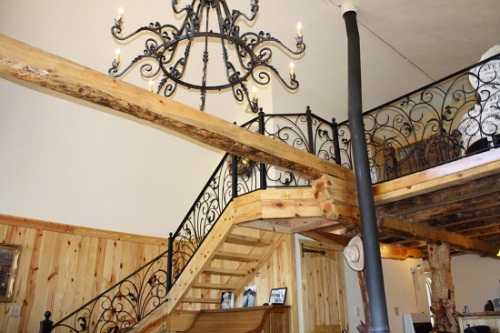
Still, they wanted a space to commune together. So they built a 1,500 sq. ft. community building with a kitchen, dining area, and space for guests and activities.
Their individual homes are 400 sq. ft. cabins, running around $40,000 each.
Their community, dubbed “Llano Exit Strategy,” was designed to handle the harsh, arid Texas climate.
These buildings were designed for low environmental impact, and sustainability.
The solar heat is dramatically reduced by galvanized metal siding and spray foam insulation, which also helps keep heat in during the winter.
The roofs are sloped to angle rainwater runoff into water catchment tanks. In this kind of climate, every drop counts!
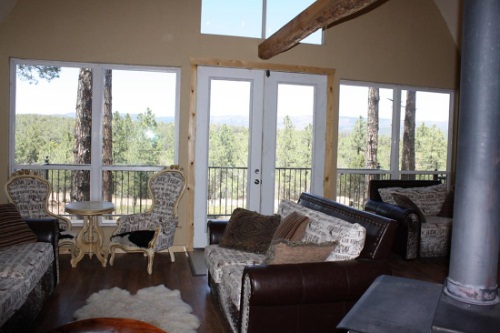
The “Hill Country” terrain is a beautiful place for raising families.
The interiors of the homes are designed to look like a cross between modern and rustic. The corrugated sheathing gives the modern feel.
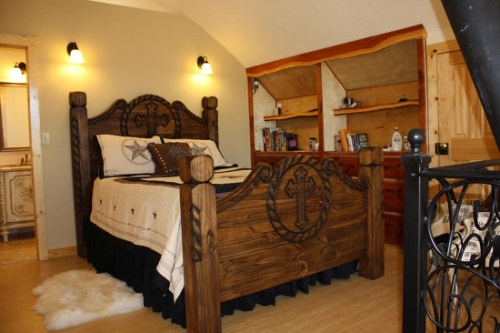
The rustic, cozy feeling comes from barely treated wood which shows off all it the grainy details.
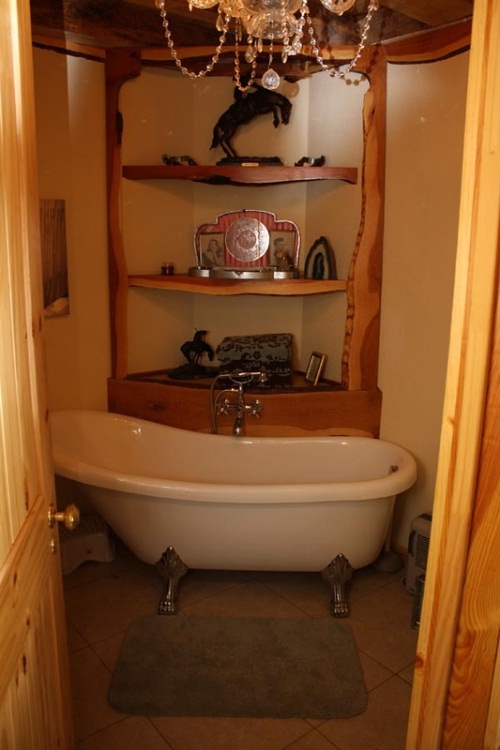
The 400 sq. ft. cabins have no trouble containing the needed living space and bathroom. A little creative space management goes a long way in making a tiny home comfortable.
After seeing a “Bestie Row” like this, I won’t be surprised to see more popping up in the near future!
I love my life, it wasn’t always that way though, I used to live like most people in the middle-lower echelons of working and living, I did pretty well, but worked ALL the time for not very good wages, in fact I worked 2 jobs most of the time, and on rare occasions, I worked 3 jobs. I did all of this just to keep myself in a mediocre apartment, driving a mediocre vehicle. I didn’t hate my jobs, I was thankful to have them, but I wasn’t going anywhere and had little prospects.
So what changed? My life, it was time to make a change, to give up everything I had, my home, my jobs, my location, I traded it all in for 5.75 acres of high desert, unimproved, raw property on the side of a mountain. We moved some 500 miles away from everything we knew, including family and friends to make a fresh start. PB built a small box on stilts, it was 16×16, that was our new home, with a few solar panels, no running water, no flush toilet or shower, we did have heat, which was a good thing since it was about 14 degrees F on our first night.
One of the reasons we are able to live like we do is because everything is paid for, we have few bills and those are tiny bills, we live well below the poverty level, but we live very well considering. It’s been 8 years now, we have a bit more of a house around us, the Sky Castle, our bills are still few and small, absolutely no credit cards or loans, no debt.
Last year I started working a job as a merchandiser, I had done it for 10 years at a big box electronics store, but never dreamed I’d be able to do that kind of work again out here in far west Texas. Turns out that there are merchandising companies, some are rather large, servicing many large companies nation wide, I absolutely LOVE doing this work, it’s hard work sometimes, but often it’s pretty easy, I do come home with bruises and exhausted from long days and a LOT of driving around, but it’s the kind of work I love doing and feel so very fortunate to get to do it again.
I wondered how these stores could afford to pay what they must pay to have us come in and work, especially when their own employees often make minimum wage or just a bit more, I finally came to the conclusion that even though they pay US more, they don’t have to pay the other expenses involved in having employees, from insurance, to liability, unemployment and such, it’s really a bargain for them, they pay us to come in and do specific jobs, we are able to do the work with little …
When going off-grid, things can tend to get a bit primitive, but you still need to get your laundry clean, there are many ways to do it, from washing by hand, to buying high tech off-grid washing machines. I have used a few different methods of washing my laundry. I often just toss what I need in the sink, wash it by hand and hang it out to dry, if I have a large load of laundry, I can use my neighbor’s washer and dryer (we trade out keeping his place up for such luxuries)… I have used a 5 gallon bucket with a long handled plunger.
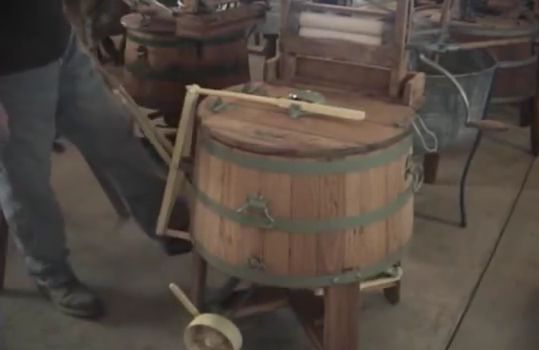
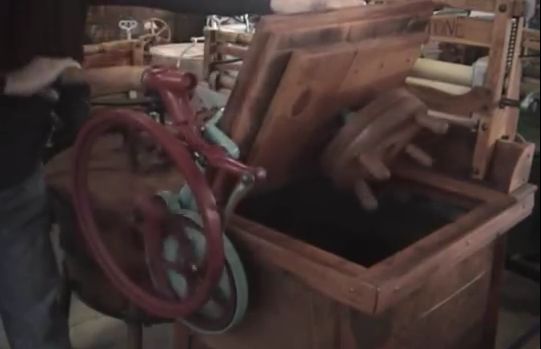
This video shows some of the old washing machines before electricity, all are hand powered, well one of them is apparently goat of dog powered. I like the ones with fly wheels or rack and pinion gears. Most of them are simple machines, using gears to turn what looks like a model of a cow’s udders to agitate the laundry. At least one of them had a set of wringers, also known as a mangle on the top to get out more of the moisture.
I hope you enjoy this video, I know I did, and be sure to check out the rest of the videos on this YouTube channel.
* Hundreds of survivalists and ‘Preppers’ gathered in Salt Lake City last weekend to forestall the Apocalypse
* Shown underground bunkers, tactical weapons and an armed $2,500 Motoped Survival Bike
* Taught how to store food and dressed as zombies for special contest
Hundreds of survivalists and “preppers” were gathered in the Salt Lake City suburb of Sandy for the first PrepperCon, last friday, featuring demonstrations of underground bunkers, food storage and armoured vehicles.
Scott Stallings, one of the show’s founders, says the event was inspired by the success of ComicCon and is amping up the entertainment with the hope of attracting younger people who may not be enthusiasts of food storage and other survivalist strategies.
Among the expo’s main events is a zombie apocalypse costume contest and appearances by actors from the AMC hit show “The Walking Dead.”
During the two-day expo, visitors were shown specially-equipped underground bunkers, learned new methods of storing food, tried out solar powered flashlights, knives of all shapes and sizes, hi-tech gadgets, food storage units, first aid supplies and armored trucks. There were also live demonstrations and a survival cooking contest.
Motoped employee Ken Stone showed off the Motoped Survival Bike, described by the company as a ‘tactical blank canvas’ with a 500-mile range, 200mpg efficiency and a heavy-duty universal rack.
THE MOTOPED SURVIVAL BIKE
The Motoped Survival Bike is described as something in between a ‘hard-core downhill mountain bike and a fully-fledged motorcycle’.
It can be pedaled or motored without stopping to make a change, and can ‘go where stand alone bicycles or motorcycles can’t’.
Unit weight: 132 pounds
Range: 500 miles (805 km)
Efficiency: 200 mpg (1.2 L/100km)
Top speed: 24mph
Engine Displacement: 49cc / 125cc
Max Horsepower: 49cc – 2.41 HP @ 7500 RPM / 125cc – 7.78 @ 7500 RPM
Front Suspension: Adjustable DNM USD-8 Forks (8″ travel)
Rear Suspension: Adjustable DNM Burner – RCP2 Shock
Seat Height: 35″ (Adjustable)
Cost: $2,499
Source: Motoped
The $2,500 bike can be pedaled or motored without stopping to make a change, and can ‘go where stand alone bicycles or motorcycles can’t’.
But with a top speed of 24mph, could it outrun zombies?
The company certainly appears to think so. ‘This bike was built for the creative survivalist. Apply your favorite gear and escape with your life,’ an online description of the vehicle reads.
Following PrepperCon, Miller, 15, told KUTV that she thought the expo had been ‘really cool’ and that Salt Lake City was a ‘gorgeous’ region.
‘I enjoy meeting the fans and getting their perspective on the show,’ she added.
The North Carolina teenager was joined at the event on Saturday by her co-star, Theo Crane.
Celebrity survival expert Mykel Hawke, a retired U.S. Army Special Forces officer who is best known for his role on the reality TV series ‘Man, Woman, Wild’, also made an appearance.
On its website, PrepperCon describes …
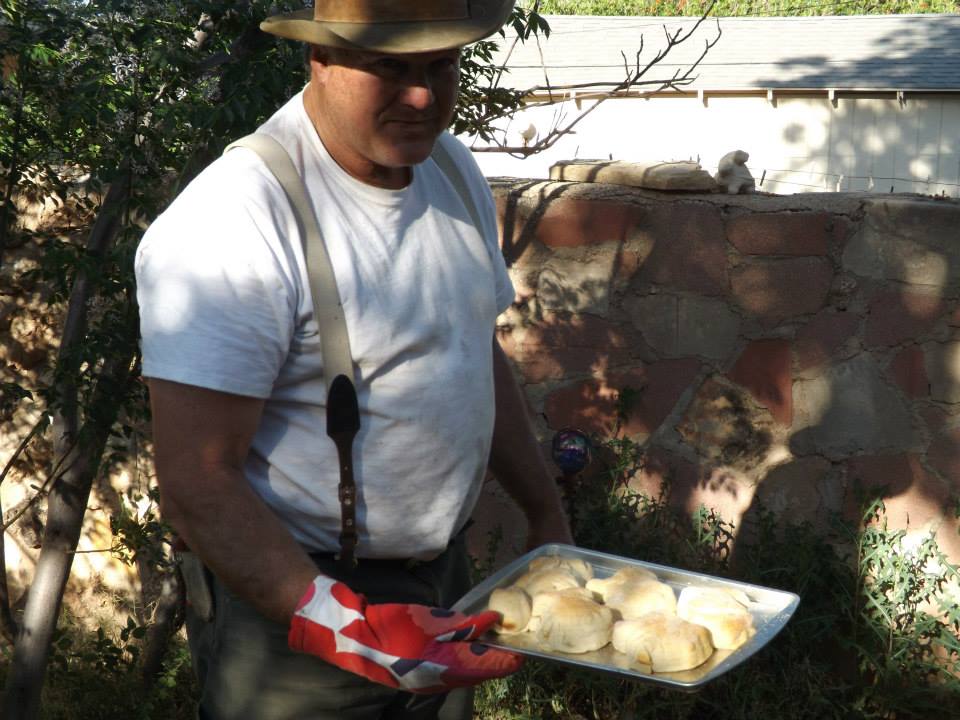
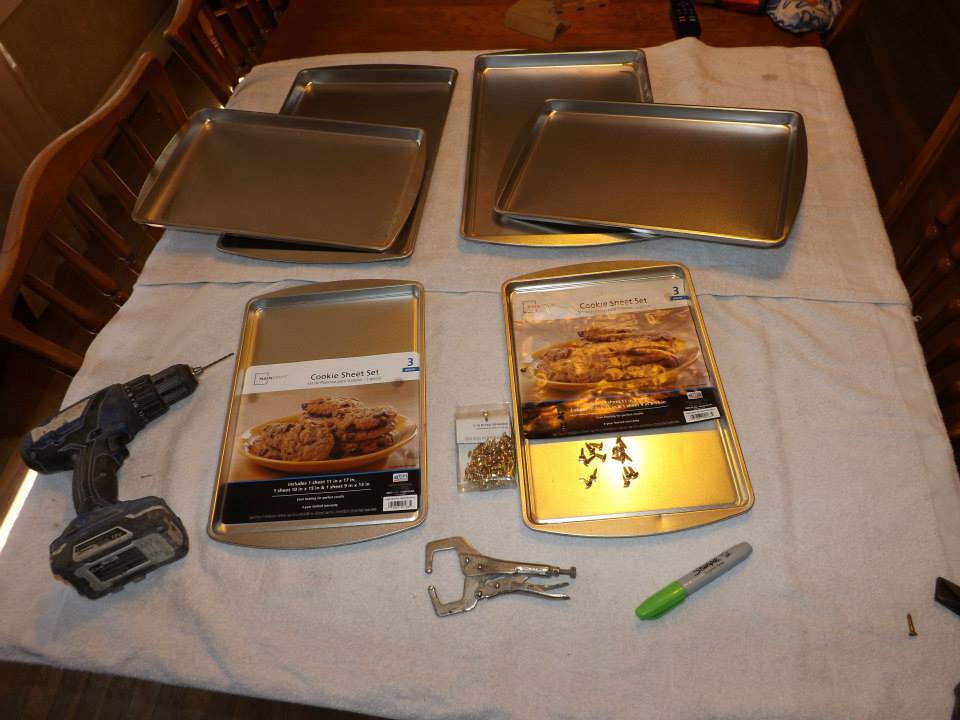
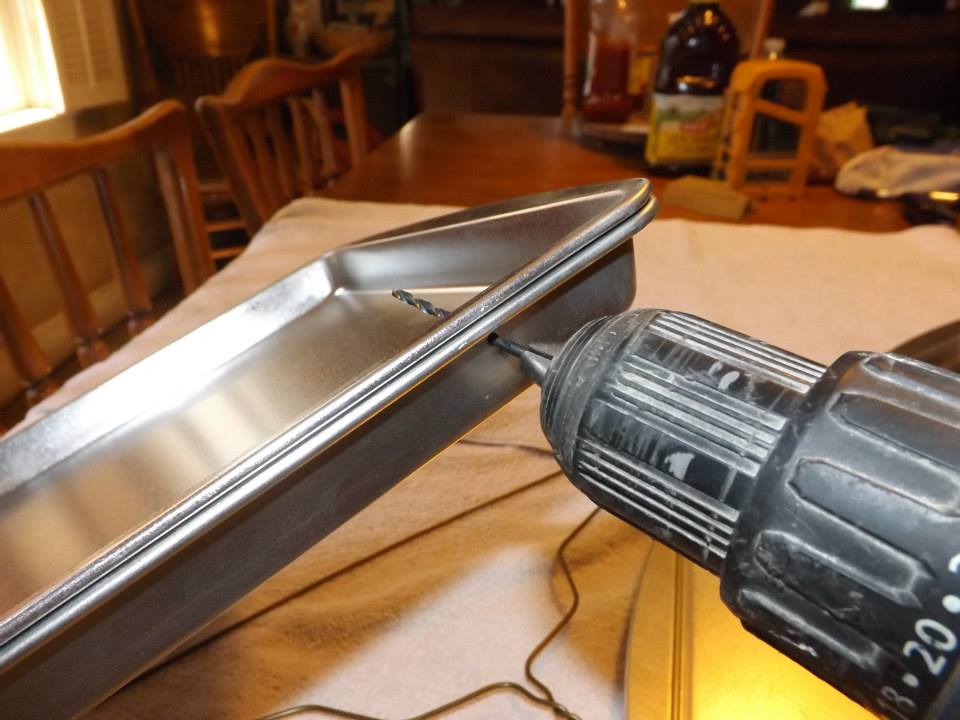
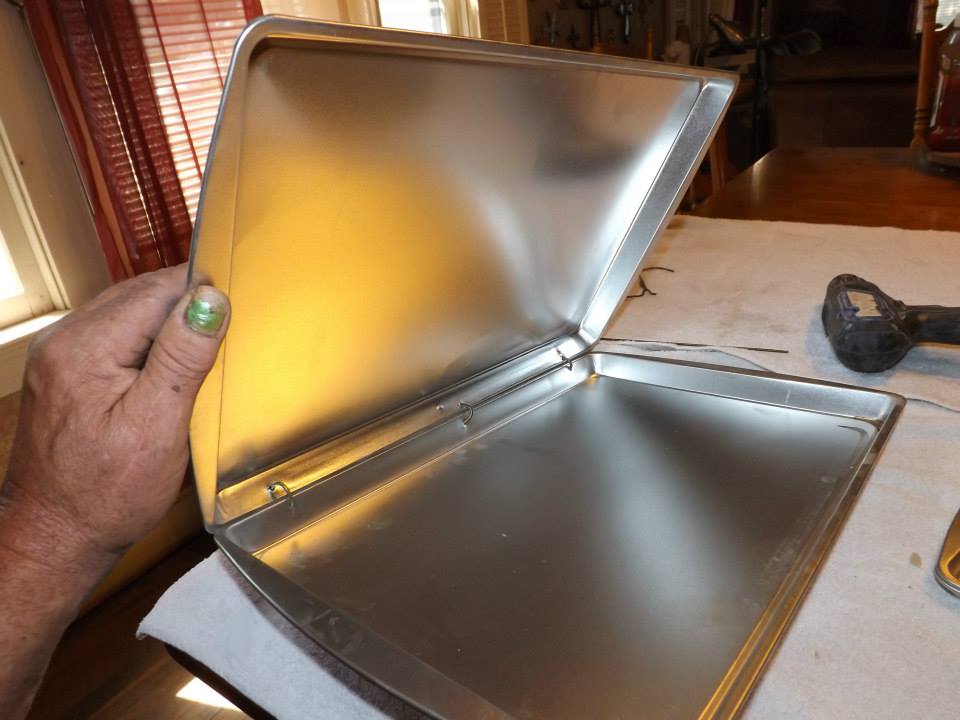
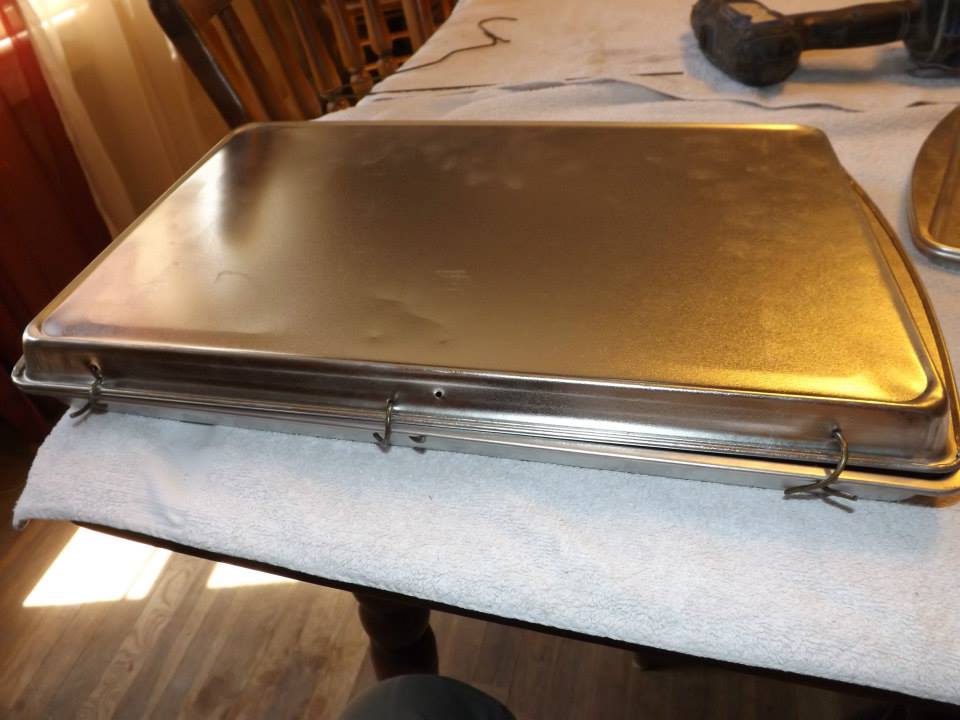
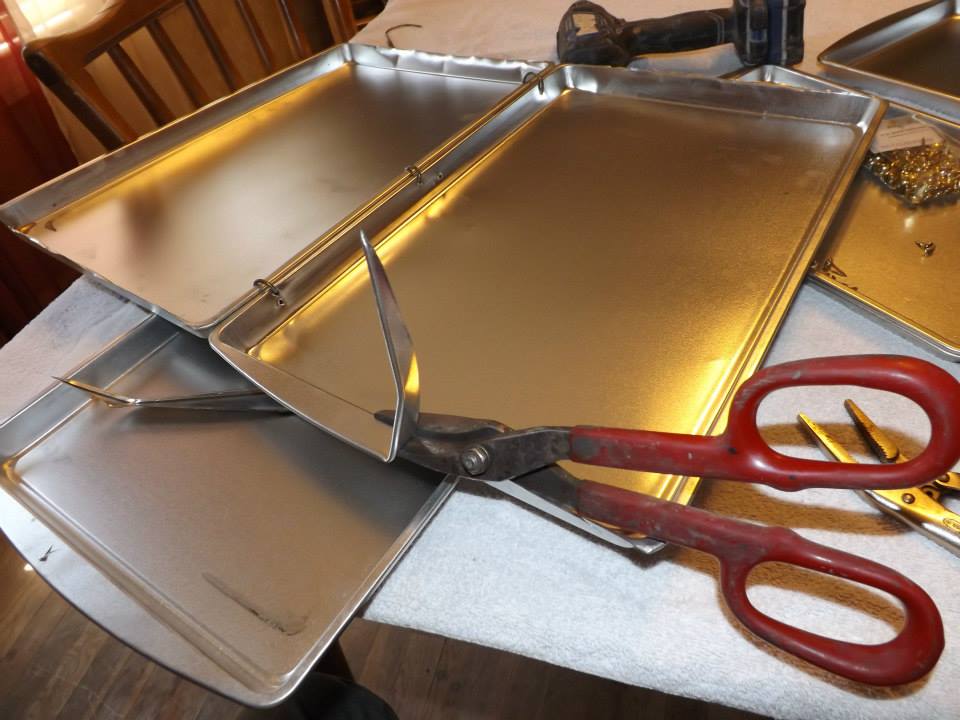
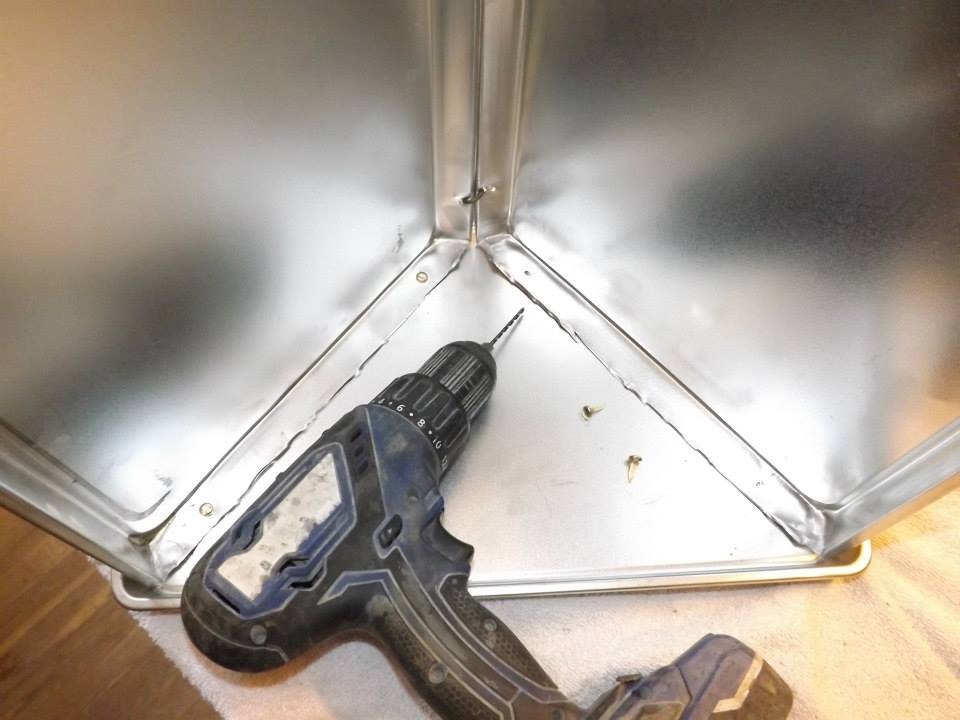
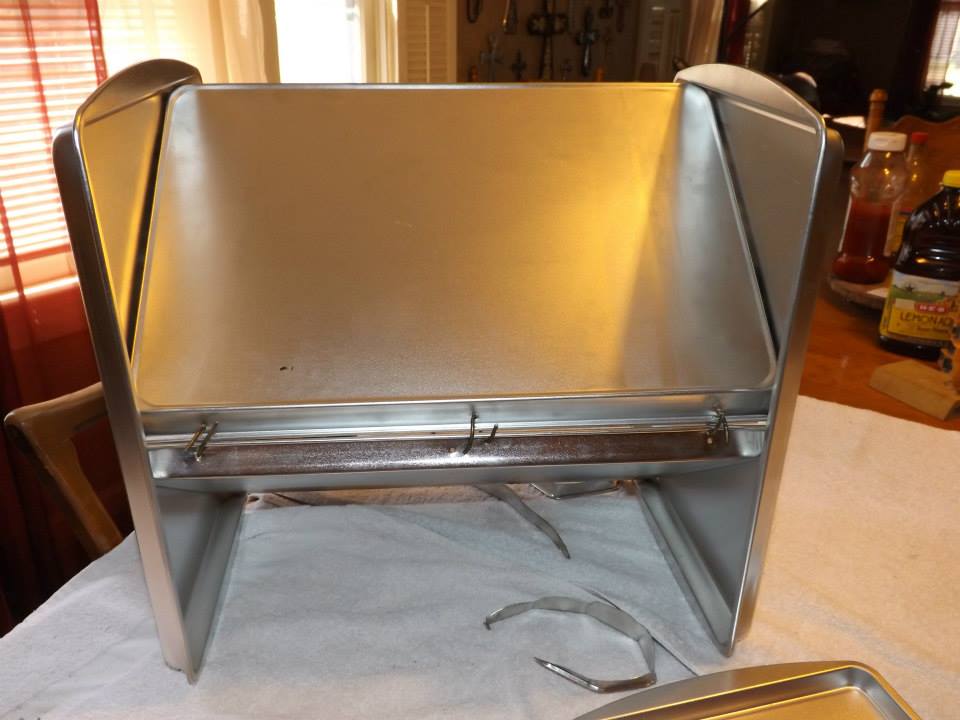
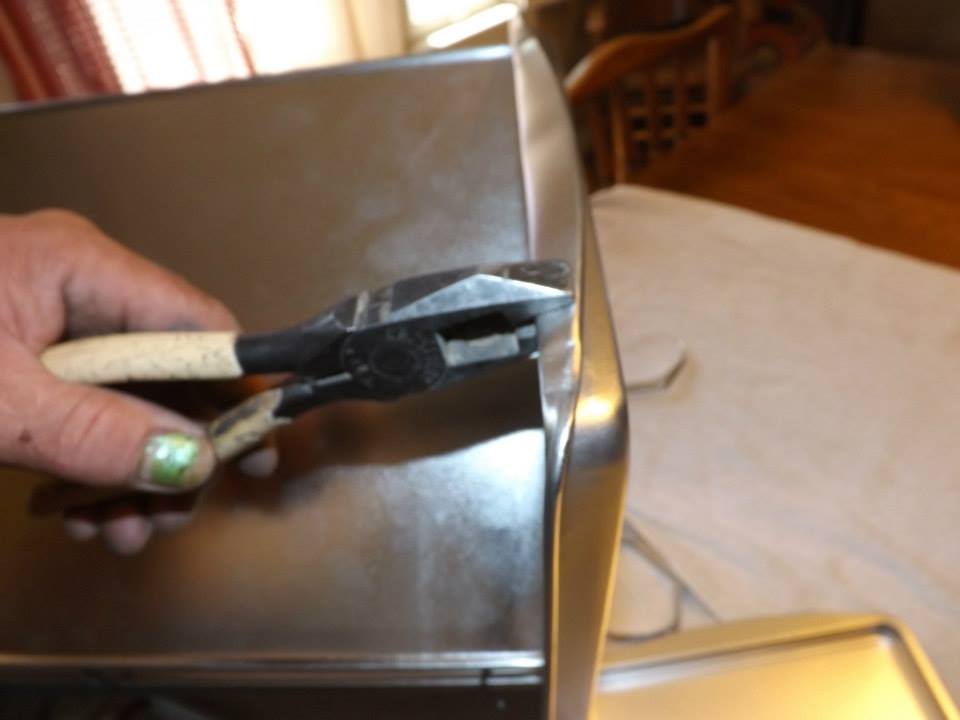
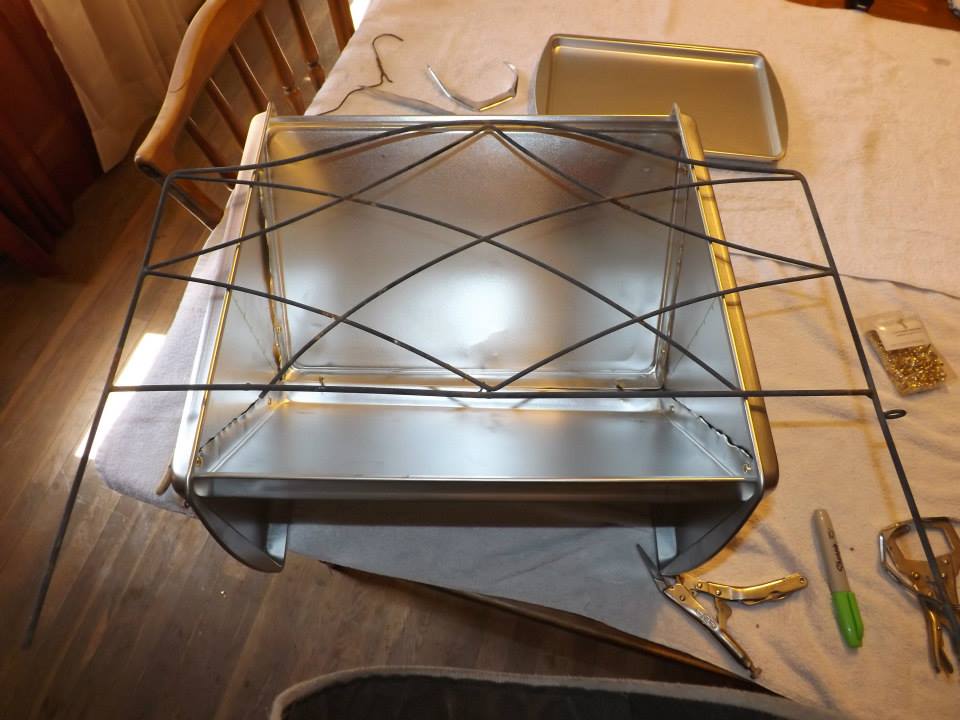
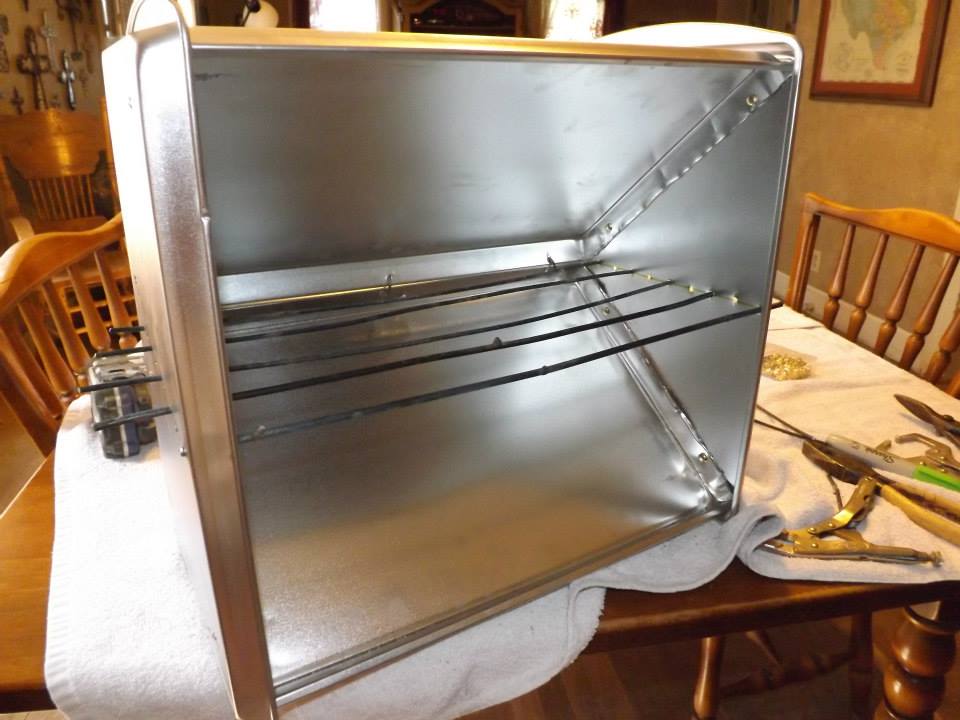
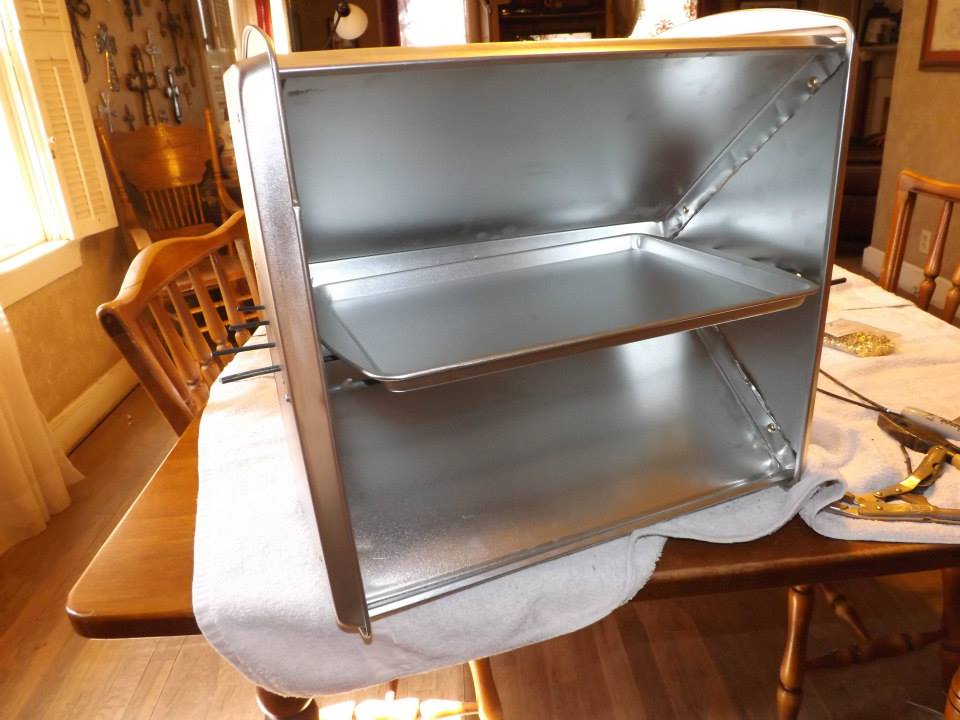
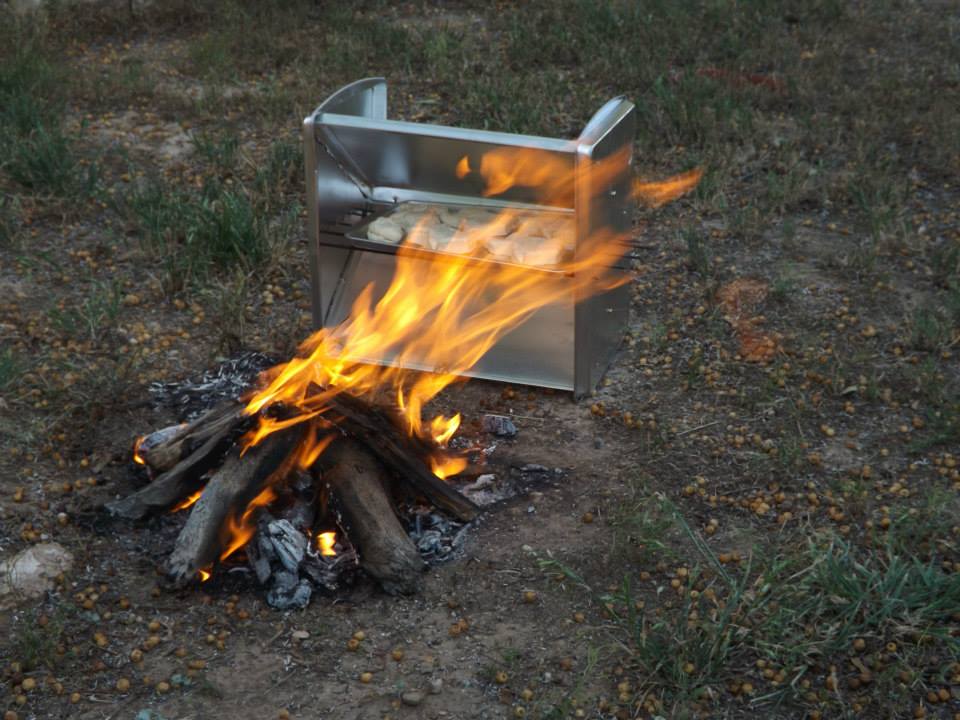
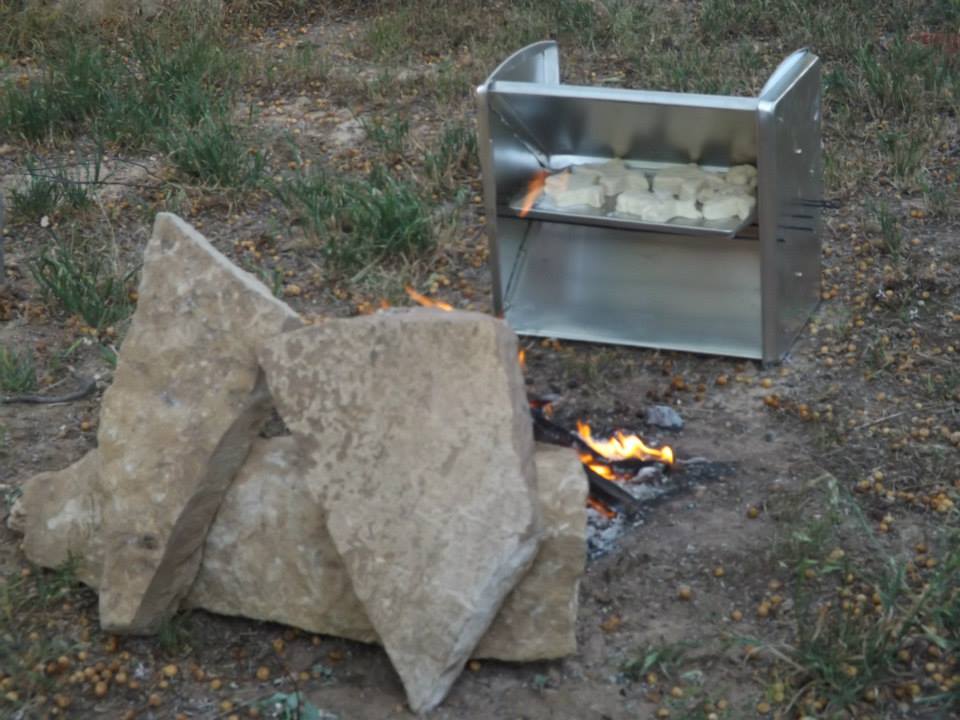
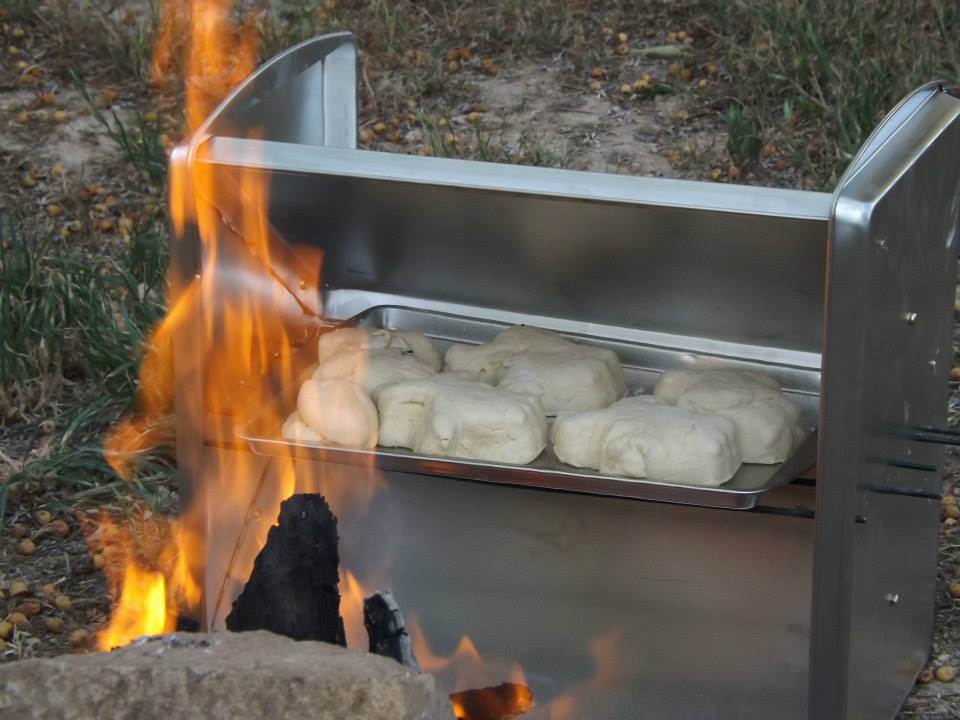
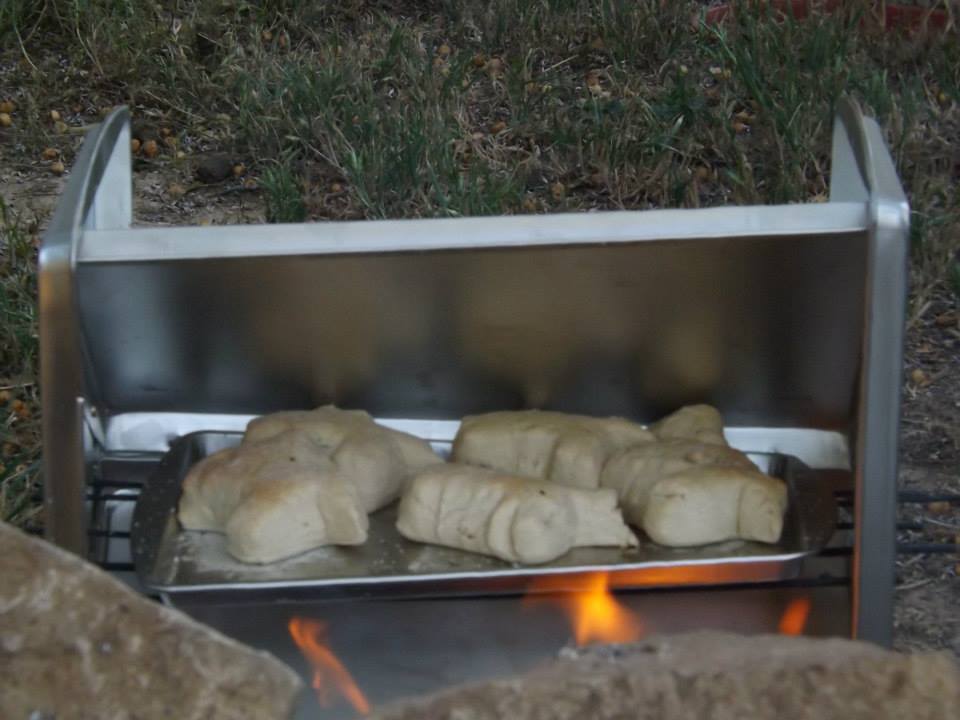
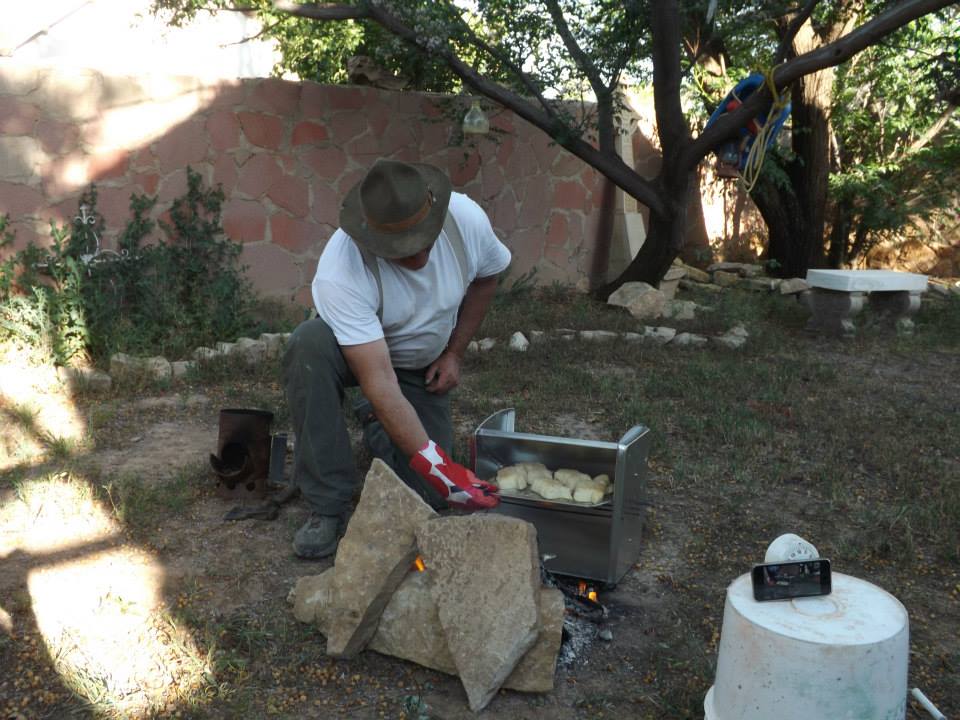
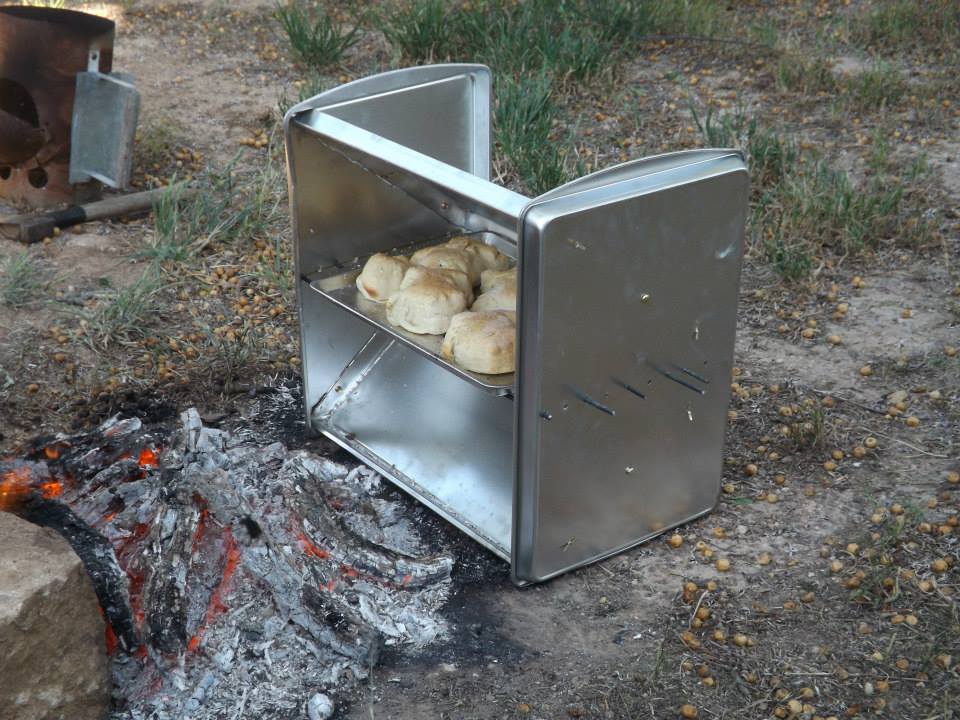
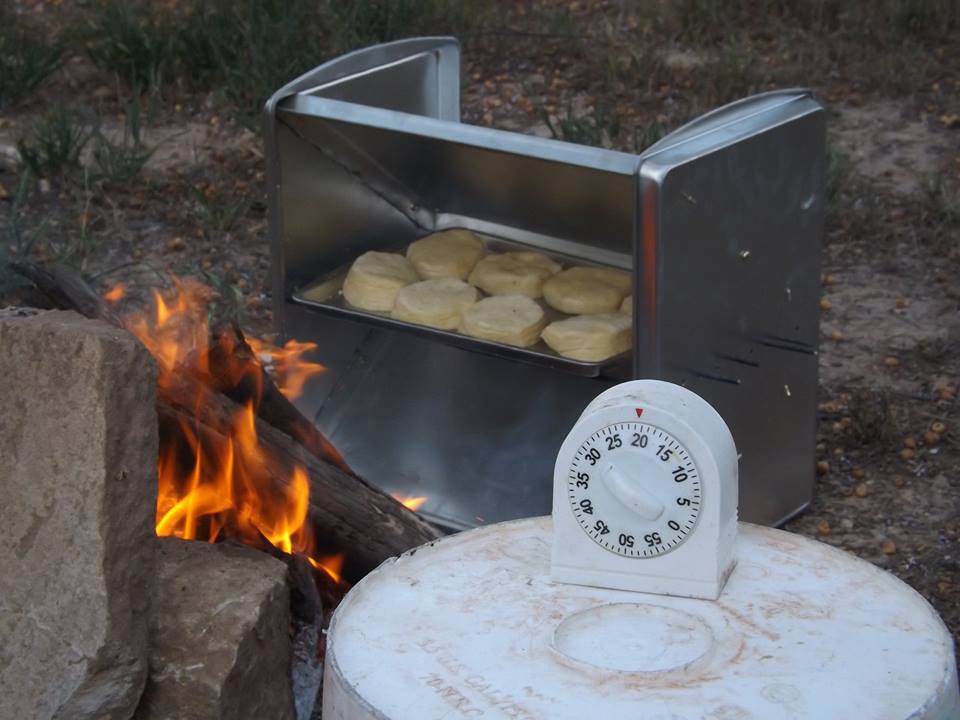
I have some truly ingenious friends on FaceBook, and Kent Lee Ivey is one of the best, he loves nothing more than to travel around, pick up seemingly unrelated junk and turn it into really useful stuff. Earlier today I saw pictures he posted about how to build a reflector oven, these are really cheap items, but with a bit of effort, it is transformed. Here is how he did it in his words (and pictures):
Two sets of cheap baking trays from Wally World, a pack of brass fasteners from their office supply, and a cheesy trellis thingy from the garden section..
Whalla !
A reflector Oven for $15
Folds back down and nestles together for easy travel.
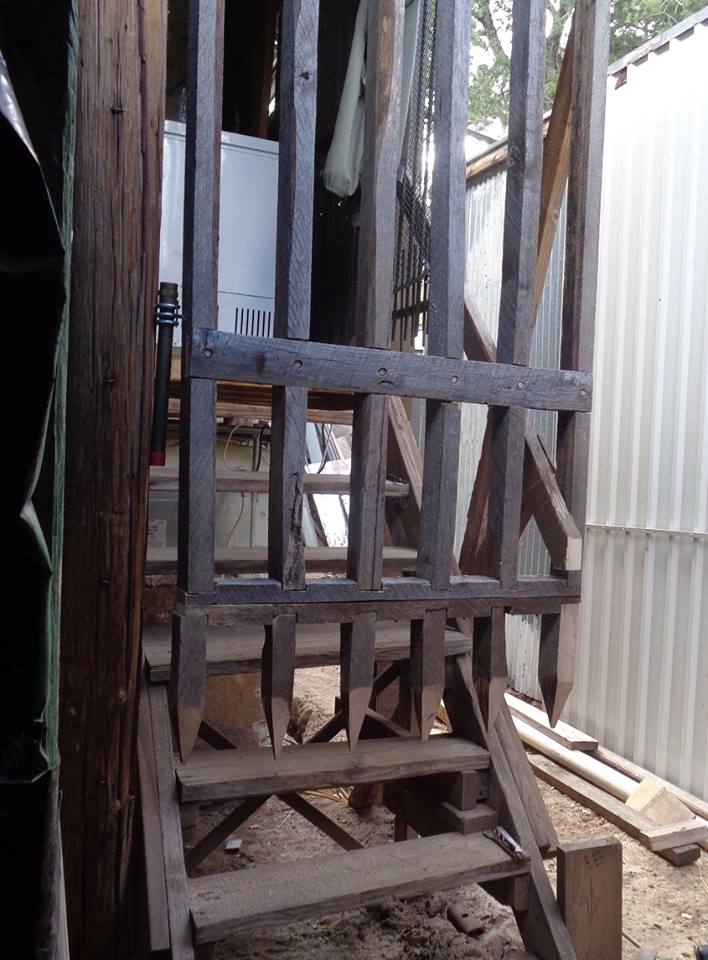
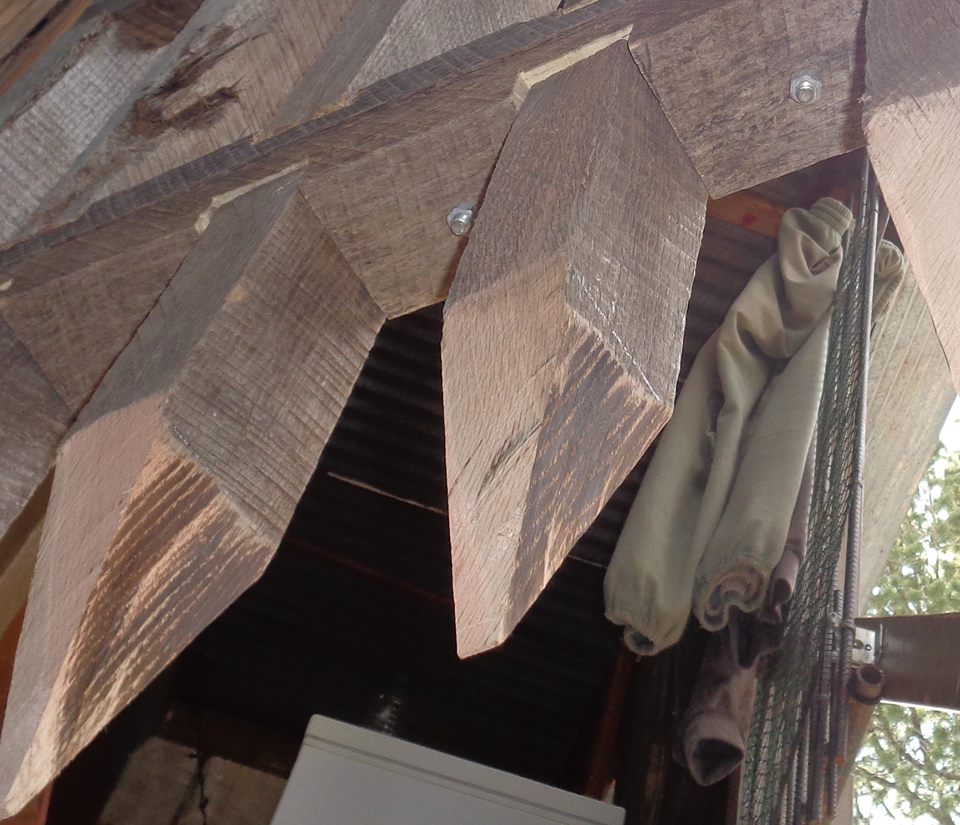
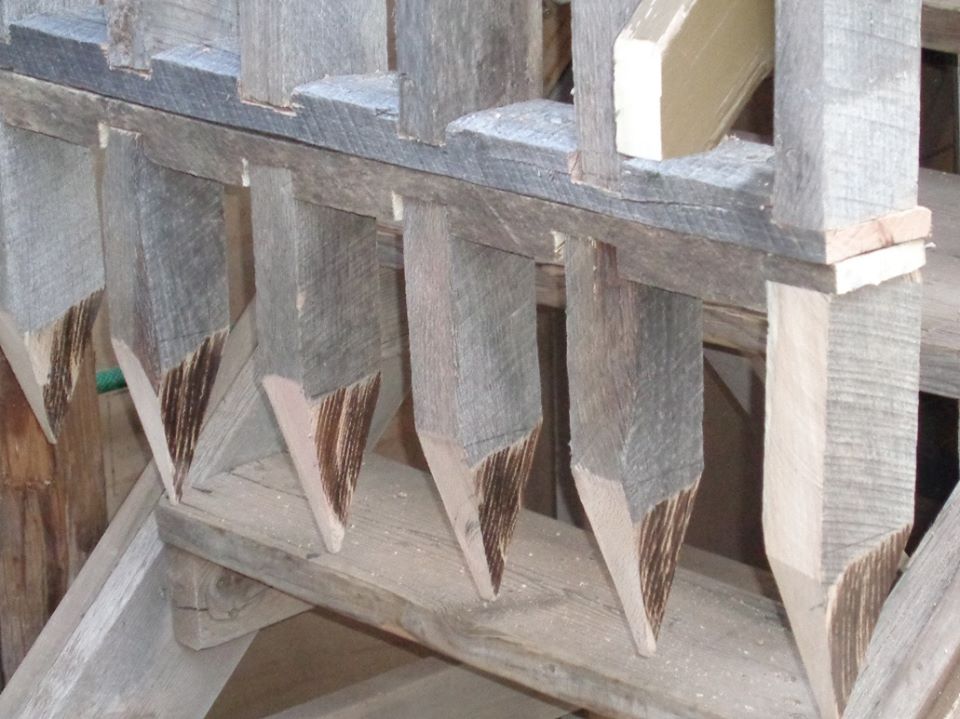
Well, more like a gate, it is part of the defense, I don’t expect anyone to really charge the door, they would have to find it first. PB decided he wanted to reinforce the front door from whatever or whoever may try to come in uninvited, so he built a gate out of solid oak, it’s big and it’s heavy. It’s mostly finished, just needs a good latch of some sort. Here are some pictures of the gate.
With spring here, it’s getting warmer, though it’s still cool enough at night to sometimes build a small fire, just enough to break the chill. The rain seems to have started up early, which is fine, unless I’m needing to get out of the neighborhood, then it’s a mudfest on our unpaved roads, most of the time I can just wait a while for the roads to dry out enough to pass through.
The truck is looking pretty good, PB has really gone above and beyond in getting everything pushed, pulled and knocked back into place, I have been traveling very slowly at night, no more than 45 mph (the speed limit is 70 mph!), I get home later but I get home in one piece. I have had a few more close calls with deer, I seem to be a deer magnet now for some reason. I still plan on getting a grille guard, the one I’m looking at is over $500 installed, but that’s cheaper than having to replace my truck or even spending some time in the ER or worse.
I now have the money to buy this grille guard, but haven’t had the time to get it installed, I’ve been working a LOT, not complaining though, it makes for good paychecks (remember, I live on the cheap, so even a little more money seems like a lot). I’ll be happy to get back into my regular schedule though, working a few days a week then having the rest of the time off to do the other things I need to do.
That’s an update on my life lately, it’s a good life, I am so thankful that I get to live this way, it’s not for everyone, and it took hard work and time to get here, it was worth it.
Actually got it last week, it was sent out a month ago from the UK, it arrived in Chicago and took a long rest, must have been very tired from flying over the ocean ;). I was starting to worry that it just vanished, more likely it fell on the floor behind some desk and someone found it later and sent it on its way.
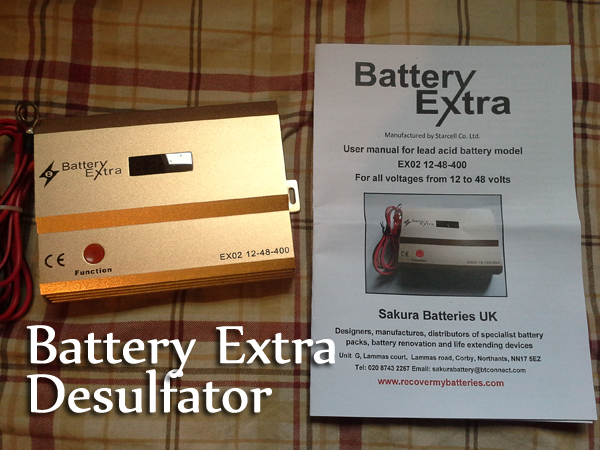
So what is this? I’m very excited, it’s a Battery Extra battery desulfator, but not just any desulfator, this is designed specifically for off-grid users. This works on the larger battery banks that off-gridders typically have, many desulfators work best on single batteries, they aren’t designed to work on multiple batteries. Sakura Batteries UK company designed this 2nd generation desulfator to work on deep cycle lead acid batteries that are connected together in bank, the one I received is the “EX02 12-48-400“, this work for 12-48 volts up to 1500 Ah, there is one above this unit, it will handle up to 120 volts and 3000 Ah.
Here is what they have to say about this unit:
For the first time a single unit battery desulfator specifically designed to maintain, recover and keep large battery packs in top condition whilst still maintaining the ability to work on smaller battery packs. Generally battery packs in the 12 to 48 volt range, over 500Ah are found in fork lift trucks, medium size off-grid solar systems and power back up systems. Dual power settings allow you to set the Battery Extra EX02 for battery packs up to 500 Ah, or for packs from 500+Ah up to 1,500 Ah. A thermostatically controlled, built in, cooling fan helps dissipate the heat created, when used with 24 volt or higher voltages. The EX02 Battery desulfator also gives an indication of battery internal resistance.
Off-Grid solar system battery packs are particularly susceptible to battery sulfation. Lead acid batteries should always be fully charged before use and with solar batteries this not always possible.
– Quad voltage 12, 24, 36 and 48 volt
– Automatic voltage detection
– Dual power settings 200 and 400 mA
– Battery voltage indicator
– No mains power required
– Works during both charge and discharge cycle
– Aluminum case
– Settable low voltage cut off
– Internal cooling fan
– Short circuit protection built in
– EMC tested to EU standards
– CE compliance tested
– Works on all types of lead acid batteries
– Easy installation via ring connectors.
Noticeable results may be seen after the first use, but in most cases the full benefits of using the Battery Extra will take longer, which is why we offer a 60 day risk free trial. If within 60 days, you are not impressed with the results, we’ll refund your money in full – no questions asked. Try the Battery Extra today.
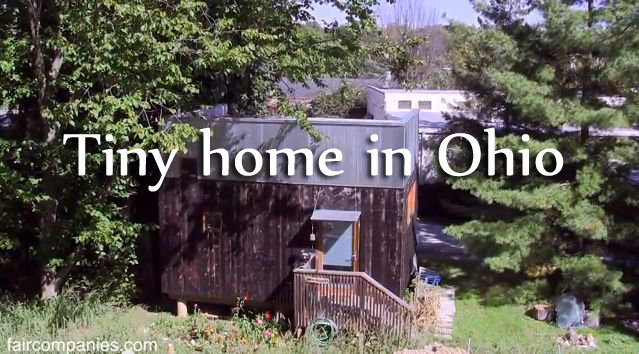
When Alex Melamed and his wife moved to the traditional brick and mortar town of Yellow Springs, Ohio they built a home only as big as they needed at the time. Melamed is a builder (Green Generation Building) and could keep costs low while still incorporating high design elements like shou-sugi-ban (charred wood) siding.
The tiny square house was affordable to build and to run. It meets Passive House standards relying on “primo” insulation, passive solar and a heat pump when necessary. “Our electric bill was $36 last month,” explains Melamed.
Johnny Sanphillippo filmed the video and gives more context to the story on his blog. “It’s not only a super insulated Passive House, but it’s also a super small and cute Tiny House. It was part of a long-term plan that allowed Alex and his wife to buy land, build a honeymoon cottage for themselves, then save and organize the construction of a larger home in the front portion of their lot. The Tiny House in back will eventually be pressed into service as a home office/guest house/rental unit that can provide flexibility and/or generate income as they go through different stages of life. They’ve actually built with their future children and grandchildren in mind. People are more likely to build a durable high quality home if they expect to occupy it for a lifetime. That’s a very different approach than a developer slapping up cheap condos and speculators buying them with the intention of flipping as the market fluctuates.”
“The larger home that’s currently under construction will not only meet the Passive House standard for energy efficiency, but it will blend with the historical character of the neighborhood while sporting a few modern touches… Of course the town itself is a significant part of why Alex and Andrew are building where and how they are and it’s a key part of the success of their business model. Yellow Springs, Ohio is a pre-World War II “Norman Rockwell” town that offers a pedestrian oriented environment where kids can walk to school and the elderly can age in place in their own homes without the isolation and auto-dependency that is common in post war suburban sprawl.”
* Filmed by Johnny Sanphillippo, owner of a small, mortgage-free home. He also films stories about urbanism, adaptation and resilience for his site Granola Shotgun.
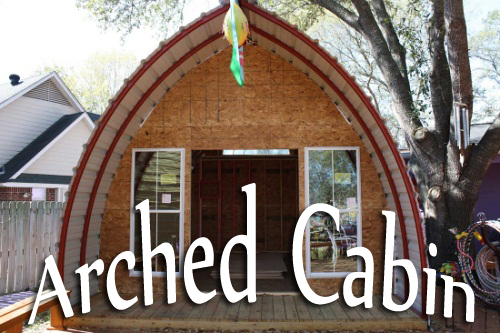
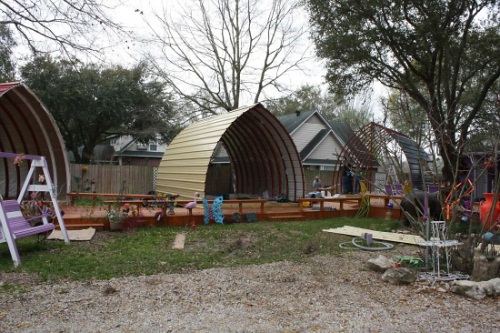
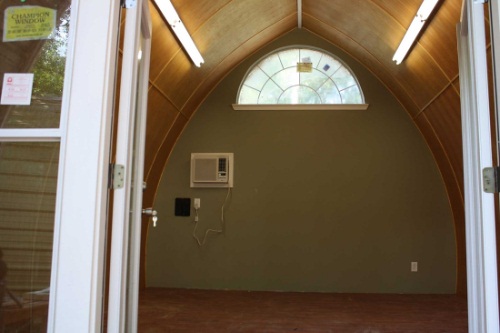
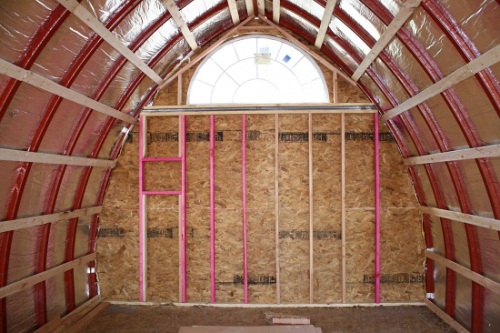
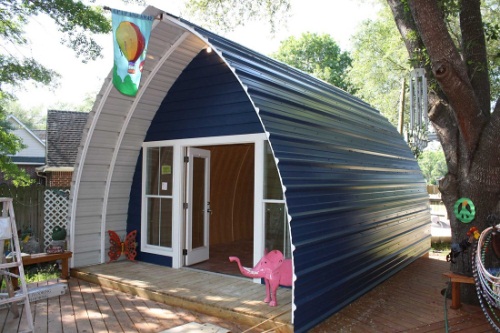
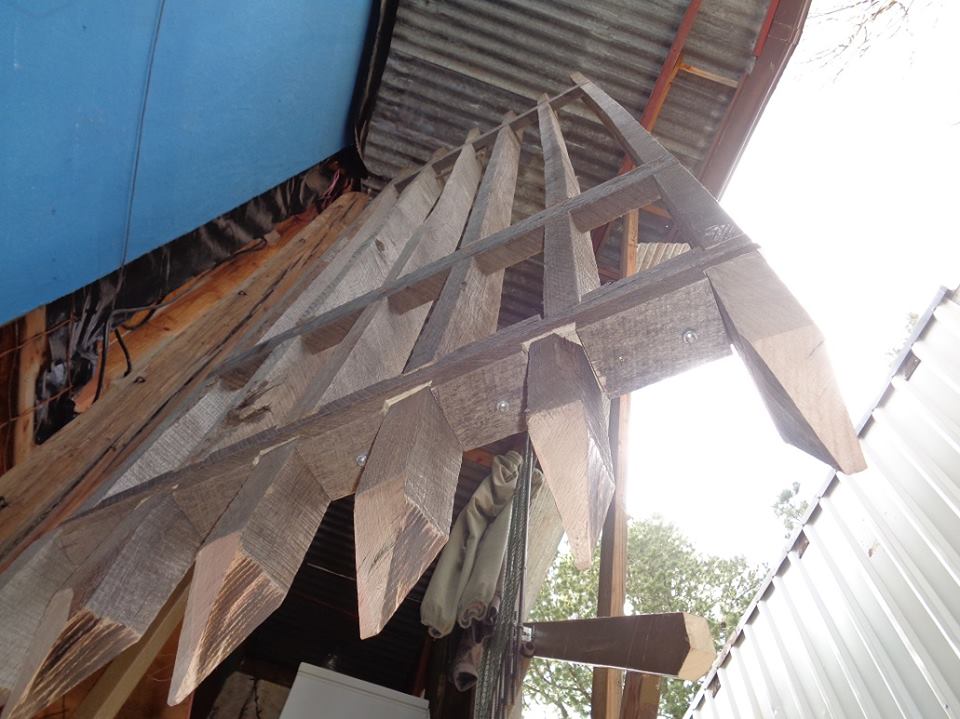
You have seen A-Frames, you have seen traditional box shaped cabins, but have you seen this? An arched cabin? It’s like an A-Frame but with more room. When I first saw one, it reminded me of the pictures I’ve seen of boats being turned upside down and turned into cabins. (link, link)
I would think these would be good in places with heavy snowfall, and places with lots of wind, I like the design being similar to the A-Frame but it gives you much more useable room, especially in the loft or upstairs area.
Here are some pictures and a couple of videos showing these wonderful cabins, contact info at the bottom








 5
5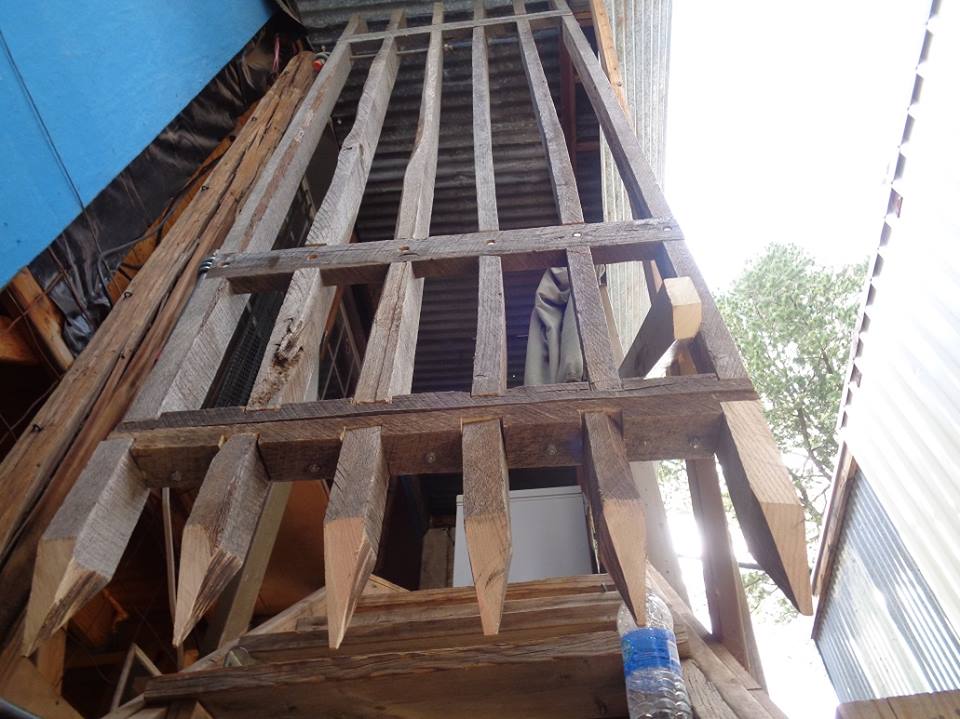
![WELCOME to Martin Freney’s new home. [/caption]WELCOME to Martin Freney’s new home. It’s built from earth-filled tyres, bottles and straw barrels, uses solar power, rainwater and recycled sewage and just might be an indicator of the future of Australian housing.
The University of South Australia lecturer is adding the finishing touches to his fully sustainable home, one of the first of its kind in Australia.
The council-approved home runs off the grid of public utilities companies and uses no fossil fuels for power, instead harnessing solar energy and thermal ventilation principles to regulate inside temperature.
His Earthship, a 30-minute drive from Adelaide, has taken five years to build and aside from a few minor features has been constructed purely with the help of volunteers.
Mr Freney said he built the home to expose Australians to the Earthship concept, a house design invented in Germany.
“It’s a wonderful solution to many of our modern problems,” Mr Freney said. “Earthships are made only from natural or recycled materials and draw nothing from local water or power sources. They require no conventional heating but are comfortable in any weather. It could be minus 20 outside and you wouldn’t know.” Mr Freney’s home is designed for two people and includes all the features of a standard house, along with a hot tub and a walk-in wardrobe behind a dry mud wall infused with used bottles. Toilets are flushed with filtered sink, shower and bath water, which also irrigates food-producing plants in the home’s greenhouse.
Drinking water is collected off the roof, which channels rainwater into a cistern. Sewage water is sent to a septic tank for cleaning and later used to water the nearby landscape. Although electricity is derived from solar panels and stored in batteries, Mr Freney said little power was needed.
“The idea behind the tyre and earth walls is that they soak up heat during the day and radiate that heat at night. That’s how they stay so comfortable,” he said. Mr Freney’s home has inspired others to pursue similar projects across Australia.
</p/>
</a>…</p> </div>
<a class=](https://off-grid.net/wp-content/uploads/2015/04/freney.jpeg) Read More »
Read More »