Communities

Arvo off-grid

Arvo Thompson went from wanting to live off-grid to actually doing it, a step that sadly, not enough people actually do. He has been living the life for 15+ years, designing and building everything on his property himself. He is truly a self made man living his dream.

I found this on YouTube and thoroughly enjoyed watching this. I will say, like some of the comments on this video, he does seem to need a woman’s touch there, but it would have to be a very special person to share a life like that, no high maintenance women need apply :) No, I’m not trying to hook Arvo up with anyone though, just making an observation.

Here is the video, the direct link is below the video, enjoy.


https://youtu.be/vI9k9_EQR3g


web statistics


Read More »

Budget solar install

I love seeing how other people do their solar systems, especially those who create and maintain their systems on a shoestring budget, which is how we do things around here.

A quick search on YouTube for solar power netted this video called “Solar Power on a Budget”, sounds like my kind of system. This is a good way for most folk to start out, learning as you go, building and enlarging as needed, replacing what isn’t working with something that works better.

These 4 videos show the transformation from a very simple starter system, so a more expansive system.


https://youtu.be/MksP1SnBr5M


https://youtu.be/GRayQpxpzsg


https://youtu.be/1hjmjQeqyy4


https://youtu.be/AvcgW8uz6js


web statistics


Read More »
Communities

Going tiny with a family

th03
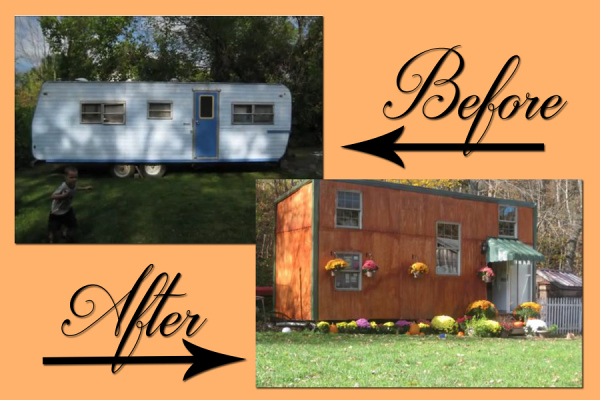
You take one ratty camper, tear it down to the frame, then rebuild it, now it’s transformed into a home, and not just for one or two, but a family with young but growing boys. As I watched the tear down stages, it didn’t look like it was going to really turn into anything useful, that’s what we call the “ugly” stage, and ugly it was, I couldn’t figure out why he even bothered. Then I saw the finished home, and this can truly be called a home, it is quite magnificent.

Here are two videos showing the beginning and finished stages. He did this with very little building knowledge, he just did it. Much of what he used was either free or near free, recycled, Craigslist and getting chummy with the manager at his local Lowes. Altogether, it cost less than $5000.


https://youtu.be/6XTPM5IQo2Y


https://youtu.be/70o4anfivRo


web statistics


Read More »
Communities

Freezers and fridges in Africa

One of South Africa’s largest producers of household appliances has announced plans to offer solar powered fridges and freezers to 600 million low-income African families.

Let’s hope they also manage to export a few hundred thousand in our direction.

The Defy group in Durban has signed a joint development deal with Specialised Solar Systems. Defy was the first company – way back in 1932 – to manufacture electric stoves in South Africa, and the company launched its solar-powered appliances, revealing it had spent R500 million since 2012 on upgrades to the East London and Durban plants, with another R450m set aside for plant and equipment investments by 2018.

Defy was acquired by the Turkish-based group Arcelik in 2011. Arcelik chief executive Hajan Kozan, who was in Durban for the company’s 110th celebrations, said the Defy acquisition was motivated by South Africa’s potential as a gateway to the continent.

He said the latest products were environmentally aligned with global best practice.

“When you open a tap in your house, in one minute you can use six litres of water. Our washing machines can do a full wash using just six litres of water.”

He added that new designs on the machines had also cut electricity usage by 25%.

“What we have to do now is educate the consumer on the importance of buying appliances that use less energy and water.”…

Read More »

Water issues

Living in our little rural community in the mountains, we don’t have many choices for over the air radio stations, the mountains block most if not all of any potential signals we might receive, in fact for us, our only choice is Marfa Public Radio, it’s in the next town over and the only reason we can receive the signal is they installed a repeater tower on the edge of our neighborhood a few years ago.

Over the weekend I heard a story about California’s drought and folk running out of water, their wells are going dry and many in those communities, especially in the outlying areas are not on city water services. They are receiving 2500 gallon water tanks to get them through this terrible time. What really caught my attention though was the statement that this amount of water would last an average family 2 weeks, 2 WEEKS! I was shocked to hear that stat, it is a testament to how much water is apparently wasted by the people in their ordinary day to day usage.

One guy they interviewed stated that his well would run dry after 15 minutes, he was watering his lawn when he discovered this, well I’d say if you only have 15 minutes of water at a time, stop watering your lawn, it seems like a no brainer to me.

We live in a desert climate here in far west Texas, we have a rainy season which we are in now, it lasts a few months, we get random rain the rest of the year but it’s not much. Some of the people in my neighborhood have wells, but the vast majority of the people out here use tanks and haul their water. Most of us use a 1550 gallon water tank, one single tank, a few have 2 or more tanks, but most have just one. On average, those tanks are filled about once a month, our local water delivery guy has an 1100 gallon tank on his truck, so the tanks aren’t filled 100%, they try to not let their tank get down to empty before calling for a refill, so you could say that the average family out here uses about 1000 gallons per month (+/-).

What is the difference here? Are we going without to save water? I’d say no, what we are doing is living with the amount of water we have, we don’t water lawns, we don’t take long showers, many of us don’t take daily showers, we don’t leave the water running when we aren’t using it, we stop leaks as soon as possible after discovering them, some of us have composting toilets so we aren’t flushing water down the toilet. Many of us use our water more than once, ie we have grey water systems that at the very least water trees, gardens and …

Read More »
Living in a van for years to make it to the top
Communities

5 things you never knew about Dustin Brown

The Rasta-headed German who beat Rafael Nadal at Wimbledon this week may have been knocked out of the competition today, but his past living off-grid in a Volkswagen is now a part of Tennis history.

For years Brown toured the tennis circuit in his battered van, living on handouts and free sandwiches in tennis clubs.

Here are a few other surprising facts about him:

Brown travelled in the camper van, which his parents bought for him in 2004, while on European tennis circuit. He broke into the top 100 for the first time in 2010 and this was also the year the last instalment on his camper van was paid!

Brown has not cut his hair for 19 years now. But Dreadlocks are not the only thing which sets this 30-year-old Jamaican apart from other tennis players. Brown has his tongue pierced and he has a tattoo of his father on left side of his torso!

“Where I grew up in the north of Germany, I experienced a lot of problems with racism,” said Brown recently. “The village next to my town, Celle, was infamous for being a Nazi stronghold. We were three or four coloured kids around and sometimes the other ones showed up with knives after school. That’s why I had some punch-ups in primary school.…

Read More »
Noam Chomsky supports off-grid film
Communities

Please support our Kickstarter campaign to finance off-grid film

We have shot most of our film about the freedom to live off the grid with interviews with Noam Chomsky and other leading intellectuals.
Please spread the word about our film about an eco-village under threat.

Last month the residents of Runnymede Eco-village won the right to appeal at the Royal Courts of Justice in London. See details Latest news on court battle

The film follows 40 activists living in woods next to historic Runnymede where the Magna Carta was signed. We see how they live, and watch them battling for their human rights to live off-grid under ancient laws protecting woodlands.

Please contact us via nick@off-grid.net if you want to help campaign, fundraise or make this film.

Follow this link to see the trailer and the appeal: https://www.kickstarter.com/projects/off-grid/noam-chomskys-magna-carta-eco-village…

Read More »

What is “off-grid”?

“How can you be off-grid and be on the internet?”
“You use propane, that’s not off-grid…”
“You go to the grocery store to buy food, how is that off-grid?”

These are just some of the questions I have been asked from people, sometimes it’s an honest question, other times I feel the twang of jealousy or even hostility from people who don’t seem to know any better, certainly not from other off-gridders-no matter the “level” of off-grid’edness they live. Most of the time my reply is we don’t have to live in a cave, wear skins and eat worms to be considered off-grid :)

There are different levels of being “off-grid”, different people have different definitions of what off-grid means to them, personally I would not judge another person’s level of “off-grid”, especially when compared to how we live. It’s a very individual thing, for me-for us, I consider off-grid to mean we aren’t hooked up to any utility, ie we don’t have city water or sewer, we don’t have city gas, we don’t have a land line (phone), and most important to me, we aren’t hooked up to the electric grid.

We haul water, we are working toward getting a rain catchment system that would fill 2-3000 gallon water tanks, that would last us all year with no problems. We generate all of our own electricity (solar power), we do buy propane, we use the small BBQ grill size tanks that we take to town to fill, we cook and heat water with that.

We do have internet, it’s a wireless WIFI system that services our rural neighborhood, it’s our only source of communication and entertainment, we did live without internet for the first few years, I would go to my neighbor’s house once a week (+/-) to check my email, then a company brought in wireless WIFI internet, we decided it was an important service for us to have.

I just recently got a smart phone, only because of my job, honestly it doesn’t work at my house, it’s pretty much only used while I’m out on the road doing my job.

So that is my definition of living off-grid, we don’t have a utility pole on our property at all and as far as I’m concerned, we don’t plan on having one. The only monthly “bill” we have for anything resembling a utility bill is our internet and now, perhaps, the cell phone bill.

I am not in a competition to see how primitively we can live as compared to others, we chose to live at this level of “off-grid”, we are comfortable living this way. I think sometimes it’s all too easy to confuse living off-grid with being self sufficient. We are certainly MORE self sufficient that we were when we lived in town, but no one can claim to live 100% self sufficiently, we don’t …


Read More »
Cheap living, tightwad, saving money, cutting costs, living cheap, offthegridnews, off the grid, offthegrid, living off the grid
Communities

The Bottom Line: Save Money by Living Off-Grid

Cheap living, tightwad, saving money, cutting costs, living cheap, offthegridnews, off the grid, offthegrid, living off the grid Everyone has their motives for moving off-grid. Mine can be boiled down to freedom – and saving money.

This post is a very dirty assessment of how off-grid living has saved me money and can help you do the same.

All my estimates will be for an average 4 person home in the United States. While the results will vary based on country, and locality, the overall premise will remain the same.


Alright, so my disclaimer: I’m not a scientist. I don’t pretend to be and I would rather never be one. I am an average, albeit hyper-logical, American so for my purposes, all of my numbers are very crude. I literally Google searched averages and I used the data from the most reputable looking website that came up. That said, we aren’t working on nuclear fusion, so I think crude logic is enough for our purposes here. Take all the averages with a grain of salt.

Also, I am using my home for the final calculations and comparisons. It is a 1400 sq ft earthbag construction open floorplan home, 50% bermed into a hill, with south-facing windows, and an energy efficient design.  Your home may be bigger or smaller, so again, your numbers will vary.

Land

I will start at the beginning. Land. For our purposes, I will assume both properties will be on the same land. While in real life, someone living off-grid has very different land needs than someone linked-in, land varies in price so much from place to place that we will leave it as a constant in this example.

So both our example houses are built on a $20,000 20-acre plot of land. Difference= $0

Construction of linked-in home: (US avg) $200 per sqft x1400sqft = $280,000

Construction of Off-Grid home: (mine) $36 per sqft x1400sqft = $50,000

Savings: Off-Grid $230,000

Mind you the construction process was much slower and I had to do almost all my work by hand, the savings from construction of a home made of dirt compared to one made of conventional wooden frame and insulation are obvious.

Next are the infrequent expenses.  Listed below are the appliances and expenses that one will have different than the other.

Linked-In Off-Grid
Toilet ea. (conventional) $200 Toilet  (homemade compost) $15
Oil Tank $700 Solar Electric System $10,000
Water Heater (elec) $600 Solar Water Heater $9,000
Space Heating $4,000 Radiant Flooring $5,000
Air Conditioner $750 Cisterns (13,000Gal) $6,400
Total $2,650 Total  $30,415


Difference: $27,765 in favor of conventional homes.  Ouch. The Linked-In setup has a much cheaper initial set-up price but if we look at the difference in cost of construction from above, I think we have this extra expense covered. Let’s see how we do when we look at our long term living expenses.

Linked-In (per year) Off-Grid (per year)
Water (non-toilet) $360 $0
Water (toilet) $109 $0
Space Heating
Read More »
Communities

The Process of Moving Off-Grid: How to Begin

coupleConsiderations:

  1. Is off-grid living right for me?
  2. What degree of off-grid living am I comfortable with?
  3. What are my options?
  4. How much money do I have to dedicate to moving off-grid?
  5. Can I cut down and downsize?
  6. Where do I want to live?
  7. What kind of lifestyle can I have there?
  8. What do I need to be careful of?
  9. What do I want to do on my land?
  10. What are my skillsets?
  11. What do I need to learn?
  12. How will I sustain myself over time?


The reason I am emphasizing the decision process so much is because it is the main bottleneck in the process.

People see the appeal of living off-grid and then hesitate because they don’t know how to proceed or even what kinds of things to worry about. My goal is to lay out all the questions and considerations ahead of time because, as a Marine, I firmly believe that the more prepared you are, the easier time you will have, and the more successful you will be.

Long live the prepared!

Read over the questions above. You don’t need to have answers for them just yet but those are ultimately things that you will need to consider over the course of this process. It is a journey, a marathon, not a sprint. It will take time and will be easier sometimes and harder at others. In the end it will be worth it.


The first question is: “Is Off-Grid living right for me”. As I stated previously, I believe everyone should live off-grid to a degree. I want to emphasize that. Some people have more know-how with tools than others. Some people may have responsibilities that keep them in the city or are allergic to sunshine. (It’s a real thing; look it up. I would be devastated.) Obviously these challenges may cause this process to be almost insurmountable. Think to yourself. What is holding you back? What keeps you from advancing? Is it flexible? Is there a way to adapt it to an off-grid lifestyle?


If you cannot adapt your circumstances to an Off-Grid life, then see question 2 above. What are you comfortable doing? Maybe you are in a wheelchair. If so, can you garden in your backyard? I found a video online of an inspiring guy who built raised beds the height of tables in a horseshoe design so he could wheel into his spot, put his chair in park, and spend the afternoon planting without leaving his chair. That’s super motivating for weirdos like me. I don’t know why but I very much enjoyed watching that. I am going to cater my advice towards full-blown off-grid living but I fully support you to do whatever it is that you are comfortable doing and to take things slowly.


Living off-grid means being independent. You no longer rely on others …

Read More »

And the pressure is on

Pressure cookers that is, yesterday while surfing the internet, I ran across an article on Mother Earth News about cooking with pressure cookers. It reminded me of how much I love mine, I have a 6 quart stainless steel Presto pressure cooker. Some of my favorite meals to cook in it are pinto beans, potatoes (baked potatoes), chicken soup, other soups, stews, rice, veggies… lots of different foods.

One of the benefits of using a pressure cooker, is it takes so much less time and fuel to cook with, the fuel factor is big with me since we have limited fuel (propane), I just can’t afford to let something simmer on the stovetop all day. Foods cook faster, retain more nutrients and just flat out taste better.

Some folks are afraid of pressure cookers, who hasn’t heard the horror stories of someone’s grandmother (or aunt, or neighbor, you fill in the blank) who was cooking in a pressure cooker and it exploded, beans all over the ceiling? Well I’m here to tell you the pressure cookers you buy today have many safety features built in, you’d have to try pretty hard to get one to actually blow on you. I had a “worst case scenario” happen to me when using a friend’s older aluminum pressure cooker. I was cooking chicken and didn’t put in enough water, it wouldn’t come up to pressure, then it made a loud BANG! Sounded like someone shot a gun off in the kitchen, I went over to it, the seal had blown out. No big deal, the pressure was relieved, so I opened it, reseated the seal, added more water, put the lid back on and continued cooking, lesson learned, make sure you add sufficient liquid for the time you will be cooking.

The other things you can do is make sure the vent hold is clear-not clogged, make sure the rubber parts are in good shape and properly placed, make sure you add enough liquid, don’t overload your pot, just use common sense and you will be perfectly safe using a pressure cooker.

One dish I love making in my pressure cooker is chicken soup, here is my (more or less) recipe…

2-4 raw chicken breasts
enough water to come up at least an inch or two in the pan
2-4 carrots, chopped
2-4 celery stalks, chopped
1 onion, chopped
seasoning

I put the chicken in the pot, add enough water to bring it up at least one or two inches, I bring it up to pressure then time it for about 15 minutes. I let the pressure off, remove the chicken, shred it and place it back into the pot, then I add the veggies, you add what you like, I put in enough water to bring it to the top of the veggies, replace the lid, bring it back to pressure …

Read More »