

Adapt your home to survive a wildfire

Energy

Never Again! Lets Close PG&E

Two major wildfires that raged in California for the past ten days are finally contained. But the debate and aftermath will rage for months.

California’s Governor Gavin Newsom is calling for a public sector takeover of bankruptcy-mired Pacific Gas and Electric Co. (PG&E). But why should the state take over the ailing and corrupt system when it could make a fresh start, installing solar and wind power in every street?

Over 30% of all electricity is lost in the transmission system, so switching to local, green power would actually save money and also help the environment. Californian legislators had made halting attempts to install green power infrastructure but it was always a low priority.

Gov Newsom and his allies took $208,400 in donations from PG&E during his run for governor before the public utility began controlled blackouts. PG&E gave the governor the maximum amount of $58,400 and gave another $150,000 to a political spending group supporting his candidacy.

The donations were revealed during a seven-month investigation by California’s ABC affiliate, whose probe was part of a documentary series breaking down California’s 2018 wildfire crisis. ABC10 published its findings in July.

PG&E also donated more than $800,000 directly to candidate campaigns, and another $3 million to political groups, most of which ultimately plowed that money back into candidate’s war chests, according to ABC10’s investigation.

Newsom refused to answer questions in July when reporters asked about the donations. “It’s a strange question,” he told ABC10. “I don’t know what more I can say.”

Forget Undergrounding

PG&E alone has some 81,000 miles of overhead lines. But forget burying the cables – there is no need these days when local renewable power supplies can be built at a lower cost. Undergrounding makes damaged lines hard to access, and leaves them vulnerable to floods and earthquakes. They’re just one source of risk among many. And it’s reallllly expensive. PG&E puts the price at about $2.3 million a mile.

PG&E has been prioritising profits over safety for years, or decades. Its own guidelines put one deadly Tower (27/222) a quarter-century beyond its useful life — but the tower remained, according to the New York Times in March 2019. Beyond wildfires, PG&E has a broader history of safety problems. A 2010 explosion of a PG&E gas pipeline killed eight people.

A jury found PG&E guilty of five counts of willfully breaking federal gas pipeline safety laws and one count of obstructing the federal investigation into the disaster.

Since being sentenced in January 2017, state investigators say PG&E sparked wildfires that killed 107 people — including the deadly 2018 Camp Fire, which killed 85 people when it destroyed the entire town of Paradise.

Kincade wildfire

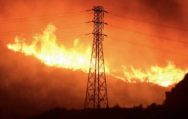
The massive Kincade wildfire in northern California burned nearly 78,000 acres — more than double the size of San Francisco. The Kincade Fire forced more than 180,000 residents out of their homes. …
Read More »
Controlled CA blaze creates windbreak against wildfire
Land

Adapt your home to survive a wildfire

Devastation caused by the recent wildfire outbreak in California reminds those living off-grid to maintain awareness of fire safety. Especially those who live in rural or isolated areas of forestry, writes Levon Barkhordarian.

As it stands the wildfires have forced an estimated 90,000 people to move, destroying more than 5,700 business and homes as well as killing over 40 people. The death toll is expected to rise once the inferno comes to an end, allowing emergency crews to navigate the unpredictable terrain and recover victims.

“The emergency is not over, and we continue to work at it, but we are seeing some great progress,” said California emergency operations director, Mark Ghilarducci. More than 9,000 firefighters are currently fighting the blaze with helicopters, air tankers, and 1,000 fire engines. The director of the California Department of forestry and fire protection, Ken Pimlott described the spread of fires as “a serious, critical, catastrophic event”.

With this in mind, how can businesses, communities and off-grid inhabitants hope to limit the damage caused by the current wildfires and the inevitable fires of the foreseeable future?

There are relatively simple precautionary steps you and your neighbours can adopt to protect your family’s land and property.


Use these examples to protect your property.


  • If your property is located near other buildings or you have neighbours close to your land you should discuss plans for collectively tackling fire safety in your area. Creating contingency plans and working together as a team in remote areas can drastically increase your protection.
  • Small trees, dead trees and ground fuels such as pine needles and leaves should be cleared from around your property creating at least a 30 to a 100-meter radius of cleared space. Dry leaf litter and debris will significantly increase the chances of fire spreading. So, it is extremely important that you create a clearing around your property to minimise this effect.
  • Next, you should prune and cut large tree branches to a height of 10 feet. This inhibits a fires ability to crawl up the trunk of a tree to reach its canopy. If you have conifer trees on your property or other species which you don’t want to discard it is at least worthwhile thinning their branches and crowns to create a partition 10 feet or more apart. This stops the fire from migrating from tree to tree.
  • It is a misconception that grassy lawns increase the spread of wildfire, in fact as long as you keep your gardens well-watered and maintain a short length to your grass it should act as a fire breaker. However, it is imperative that you take the time to keep your grass lush and well hydrated.

Extra ways of keeping your property safe from wildfires.

  • A major reason so many houses burn down completely is that emergency services such as fire departments find it difficult
Read More »