

Communities

Kenyan company Sun King calls itself “the world’s largest off-grid solar energy company.” That’s not just marketing hyperbole—and it’s a statement that reveals how the energy landscape has shifted beneath our feet. The company’s recent $156 million securitisation (meaning sale of their existing revenue streams), the largest of its kind in Africa, isn’t just another funding round. It’s a watershed moment that signals the off-grid solar industry has finally matured from a niche development sector into a legitimate financial asset class that commercial banks are willing to bet serious money on.
But here’s what makes this story truly compelling: Sun King’s claim to being the world’s largest isn’t based on the usual Silicon Valley metrics of valuation or venture capital raised. Instead, it’s built on something more meaningful—actual impact at scale. With over 27 million solar products sold, 23 million homes powered, and $1.3 billion in solar loans extended to nearly 10 million customers across 46 countries, Sun King has quietly assembled the largest customer base in the off-grid energy sector while most of us were still debating whether distributed solar could ever be commercially viable.
For the first time, commercial banks are treating off-grid solar as a mainstream financial asset rather than a development experiment. This legitimisation opens doors to capital pools that dwarf traditional development finance, creating the potential for unprecedented scale in clean energy deployment.
The timing of this funding is significant. As the world grapples with energy security, climate change, and the persistent challenge of providing electricity to 1.8 billion people who still lack reliable access, Sun King’s securitisation proves that market-based solutions can scale to meet these challenges—if we’re willing to think differently about how energy systems work.
Off-grid solar companies lacks the standardised metrics that financial analysts need to define leadership in traditional energy markets. Unlike utility-scale solar where gigawatts of installed capacity provide clear rankings, or residential solar where revenue figures tell the story, off-grid solar operates in a more complex ecosystem where success must be measured across multiple dimensions.
Sun King’s claim to the crown rests on several metrics. First, customer reach: with nearly 10 million individual customers served, Sun King has built a customer base that dwarfs its closest competitors [1]. For context, d.light, another major player founded the same year as Sun King’s predecessor Greenlight Planet, reports revenue of approximately $217-309 million annually but serves significantly fewer customers [2]. M-KOPA, the Kenyan fintech-solar hybrid, boasts higher reported revenue at $618.8 million but operates primarily in East Africa with a more limited geographic footprint [3].
What’s particularly striking is Sun King’s product volume: over 27 million solar products sold represents a scale of manufacturing and distribution that few companies in any sector achieve, let alone in the challenging off-grid markets of Africa and Asia. This isn’t just about bragging rights—it demonstrates something crucial about the company’s operational capabilities and market penetration …
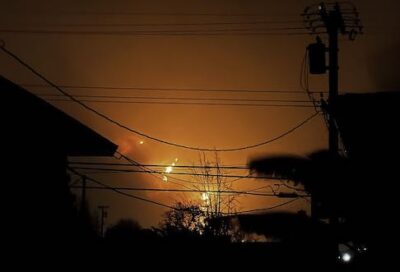
The number of faults on the power grid near three of the major Los Angeles County fires skyrocketed in the hours before the blazes began, according to Whisker Labs, a company that monitors electrical activity. This new evidence is raising serious questions about the role of the electrical grid in sparking the devastating wildfires that have ravaged the region, suggesting that the grid itself, not just extreme weather, is a major culprit behind the fires.
Bob Marshall, the chief executive of Whisker Labs, spoke exclusively to The LA Times, revealing that the areas near the Eaton, Palisades, and Hurst fires all saw massive increases in faults in the hours leading up to the fires. These faults—caused by everything from tree limbs hitting power lines to wires contacting each other—create sparks that can quickly ignite dry vegetation, setting off catastrophic wildfires in a matter of minutes.
It’s a chilling reality that we have seen unfold time and again: poorly maintained power lines, combined with nature’s fury, lead to a deadly combination that fuels the flames of these modern-day infernos. And the recent findings by Whisker Labs suggest that this very scenario played out in the heart of Los Angeles County.
3 key questions that need to be answered:
Why Didn’t They Turn Off the Power?
Can Insurers Sue the Utility Companies?
Are the Executives Facing Jail Time?
The Perfect Storm of Fire and Power Lines
Let’s start with the Palisades Fire, which has already become one of the most destructive fires in the history of Los Angeles. It spread l across 17,000 acres, destroying more than 5,000 homes, and was fanned by the notorious Santa Ana winds. Winds topping 100 mph created the perfect storm, but what many don’t realize is that a crucial piece of the puzzle was the power lines.
According to Whisker Labs,by the time the fire began to spread like an uncontrollable beast, power lines were already sparking in the area. A similar pattern was observed in the days leading up to the fire, with faults in the power grid reaching dangerous levels just hours before the inferno took hold.
The pattern is clear: the power grid is malfunctioning in the worst possible way, creating a situation where something as simple as a tree branch falling on a wire can trigger a wildfire. And when the winds pick up, those sparks become an unstoppable force of nature, fueled by dry conditions and a climate increasingly prone to extremes.
In October 2017, 250 square miles burned in Northern California, destroying 6,000 homes and businesses and killing 44 people. For now, over SEVEN years later – the cause of these fires has not been determined. The private utility company Pacific Gas and Electric, known to Californians as PG&E, is under investigation. Total damage for the Northern California wildfires comes to $9 billion. PG&E has started stockpiling cash…
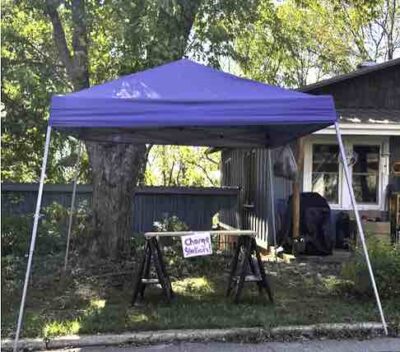
As residents of Asheville, NC, queue to buy water, and stalk the streets of this artsy town looking for somewhere to charge their cell-phones, their entire view of the mountain enclave has been turned on its head. A week after Hurricane Helene, nearly half the population is still waiting for its power to be turned back on, according to off-grid analysis of a range of press releases, social media reports and industry data.
Thousands moved here over the past 10 years, precisely to reduce the risks of extreme weather, but many of the newcomers chose not to take out flood insurance because premiums were high, and are now facing devastating losses. They accepted assurances from Duke Energy, which supplies 95% of the power in the region, that all possible was being done to improve resilience and decarbonise the energy supply.
But current reports indicate nearly half Asheville’s 250,000 population is still without power and water. Across the Carolinas, where “major portions of the power grid… were simply wiped away, ”a million customers remain in the dark, according to PowerOutage.us.
Duke Energy has faced criticism in the past regarding its response to outages, particularly during severe weather events. Anecdotal accounts often cite concerns over reliability, particularly when comparing service restoration times to national standards.
August 24, 2024: A severe thunderstorm swept through Asheville, resulting in localized outages as high winds knocked down power lines (Citizen Times).
July 14, 2024: A summer storm led to multiple reports of outages across the city as lightning struck power infrastructure, impacting several neighborhoods (Citizen Times).
June 1, 2024: Duke Energy reported outages affecting thousands due to a strong weather system that produced heavy rain and gusty winds (Citizen Times).
May 15, 2024: A significant windstorm knocked out power for many residents, with gusts causing tree falls and power line damage across Asheville(Citizen Times).
I live in Asheville. Where is @DukeEnergy. They said they needed a day or two to assess the situation. its been almost a week and even in areas that were not affected by the flooding where Duke could be working on the the power, they are absent. Is Asheville another Hawaii?
— 🇺🇸 TakeBackAmerica444 🇺🇸 (@dark_to_light44) October 3, 2024
In Buncombe County where Helene hit hardest, which includes Asheville, at least 95,000 customers remain without power. In neighbouring Henderson County, 52,000 customers are still without power. Rutherford and McDowell counties still report about 23,000 and 19,000 outages, respectively.
Duke Energy has announced a $1m charitable donation to the community, but made no prediction on when the power will be back on.…

Over 14,000 people have signed a petition against large solar farms in their area following plans for a development covering 2,000 acres (810 hectares) in Wiltshire.
Lime Down Solar Park is designed to create 500MW of clean energy – said to be enough to power 115,000 homes – from six sites in villages in the county.
Developer Island Green Power says it will give a “net gain in biodiversity”. But locals say it will simply take away land that could be used for food growing, and provide no direct benefit to the local community.
The sites would be connected into the National Grid’s substation in Melksham, the proposals say.
The finance behind Lime Down is being provided by Macquarie Bank, an Australian company dubbed the Vampire Kangaroo — an Antipodean adaptation of the ‘vampire squid’ label applied to Goldman Sachs for the way it sucked up money — so most of the income may end up overseas.
The company has been widely accused of piling up debt at Thames Water, which it owned from 2006 to 2017, contributing to the problems at the water company.
With so many question marks over the environmental credentials of solar parks, it should be a cause for deep concern that Macquarie is involved .
The local MP, James Gray, who is against the scheme, blames ‘Wall Street hooligans’ for inflicting the Lime Down plan on his constituency and believes a British company would deal with the local community more sensitively.
He says this is not a party political issue as all the mainstream parties are fully behind Net Zero, as he is. He argues a Starmer-led government would be even more determined to push through Net Zero policies.
As locals see it, the whole political class appears to be ranged against the rural community of North Wiltshire, and their votes have nowhere to go on this issue except to fringe parties who have no hope of forming a government. So there is little political pressure on the Secretary of State to turn it down.
Many local residents are furious that big, titled landowners have been secretly in negotiation with Island Green and there are accusations of greed. On several estates, the land being offered for solar development has recently been taken back from tenant farmers. The rent being offered is a closely guarded secret, but sums in excess of £1,000 per acre per year are routinely advertised by renewables companies on the internet, perhaps five times the return that might be expected from farming.
Some farmers have been open in saying that they did not think there was a future in farming any more and this offered a lifeline. Others had been told by the developers that they would be surrounded by the solar complex whether they liked it or not, and had taken the attitude that if they couldn’t beat the development they …
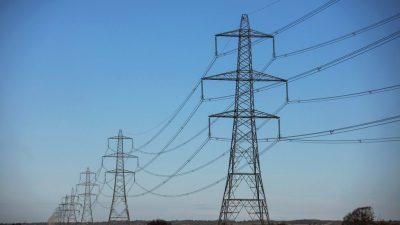
Retired film-maker Christopher Hamblin is unmoved at the prospect of a lump-sum payment from developers to compensate him for electricity towers and cables they want to build near his village in the east of England.
“That’s the trouble with these guys — they know the price of everything and the value of nothing,” says the 86-year-old resident of Ardleigh in Essex, a centuries-old settlement surrounded by some of the country’s most recognisable landscapes.
Hamblin and his fellow residents are part of a growing backlash in local communities across Britain against the expansion of power grids as the steps needed to decarbonise the economy start to encroach on them.
In an attempt to counter this resistance Nick Winser, the government’s electricity networks commissioner, has recommended lump-sum payments to households living close to proposed transmission lines. It was one of several measures aimed at cutting in half the 14 years it takes to complete these projects.
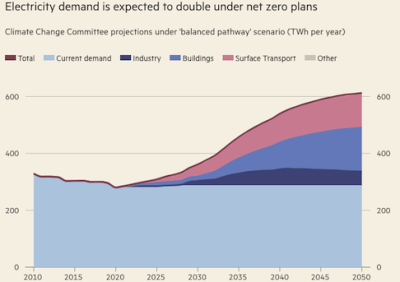
The government wants to decarbonise the electricity sector by 2035, while demand for electricity is expected to double or treble as the economy moves away from fossil fuels under its legally binding target of net zero carbon emissions by 2050. Electric Vehicles and AI data centres have added a crushing new burden.
The offer of cash for pylons (as towers are named in the UK) has not changed the mood in Ardleigh, which is in the path of a new 183km north-south high voltage transmission line that National Grid wants to build through the East Anglian countryside. It would run from Norwich in Norfolk down to Tilbury in Essex and bring in renewable electricity generated from new offshore wind farms.
It is one of several new electricity transmission lines being planned around Britain to move clean electricity often generated in remote coastal locations into more populated areas where it is needed.
The East Anglia plan mainly involves cables carried on 50m-tall pylons dotted across the countryside, including around Ardleigh, which sits on the edge of the protected countryside of Dedham Vale, made famous in the 19th-century masterpieces by local artist John Constable.
The reason for the opposition varies, ranging from blighting the landscape to the impact on farmers or health, but most opponents would rather see the power lines replaced by undersea cables running from the wind farms most of the way down to Tilbury.
“Every single house within that location — we will be in a cage of electricity pylons,” says Chris Whitfield, chair of Ardleigh parish council, pointing out part of the proposed route on a map.
Campaigners are well-organised, learning from other groups across the country, and are prepared to resort to legal action.
Local farm owner Charles Tritton suggested the anger is such that it could hurt the Tory party electorally. “The whole of East Anglia is pretty Conservative,” he said. “Add one or two per cent [swing vote] due to this …
Richard Stabbins begins an occasional series on the joys and heartbreaks of living on a boat in the middle of a big city.
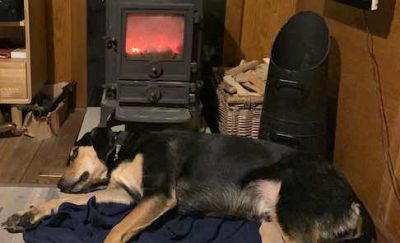
It’s early evening on the canal towpath and I’m almost home. My hands are frozen and even getting my bike lock open had me yelping expletives. I cut a dishevelled figure on the dark stretch between Broadway Market and Victoria Park, dimly lit by LED lights of neighbouring boats. Hopping onto the bow of my floating home, crouching my way through the front door, my first thought is: “I’m so glad I’ve got a dog!”. Bruno is an excitable 30kg hound, a blessing in himself. I had stocked the stove that morning with a generous heap of coal to keep him warm. It made me love him even more. It’s been 1 degree all day and, boaters returning to a frozen tin box usually despair for an hour or more at the lack of heating that we can monitor from an app on our phone. Praise be, though – I have a hound!
That contentment does not last long. Backpack stowed away in its spot between front steps and cupboard (every boater knows, space is at the key), I set to washing last night’s dishes. I turn on the taps, hear the boiler kick in, and then that splattering sound that every boat-dweller hates to hear: the water tank is empty! I slump down on to my couch made of old pallets and recycled cushions. The serenity of a warm night with dinner and a book is replaced by the knowledge that I must cruise to the nearest waterpoint. Bruno looks on from his bed with eyes that know what’s coming. At least the batteries are full and I’ve got diesel – a (hopefully) short trip like this will use very little fuel.
First things first, I check the weather forecast on my phone. I know it’s cold, but that’s not the biggest factor – it’s the wind. Google says I’ve got two hours before wind speeds really pick up, so that’s my window to get fuel and safely find a mooring spot elsewhere. It wasn’t long ago that I had been awoken at 05:00 by a fellow boater shouting for help. Wind speeds had suddenly hit eighty-plus mph and several boats had come free from their makeshift moorings (their pegs had been dislodged as there are no mooring rings available in that part of Haggerston). One boat had swung around and was resting horizontally across the canal, blocking anything coming through. Four of usin our pyjamas fought the wind and just about managed to heave in the barge Other boats were tied up to the balcony railings of canalised flats. Ropes stretched across the towpath at neck height like deadly rubber bands – a measure taken temporarily to regain some calm and order.
That feeling of …
For Release
18th Jan, 2024, United Kingdom
An evidence session tomorrow, Weds 17th Jan, before the Net Zero Commons Committee, titled ‘A Flexible Grid for the Future’, is poised to bring to light critical decisions impacting the future of the UK’s energy infrastructure.
In evidence to the committee, Nick Rosen, a prominent off-grid expert, author, and documentary filmmaker, has raised significant concerns about the current direction of energy investments in the UK, along with the plan by Scottish Power to invest £5 Billion in upgrading existing infrastructure.
Key Points:
The budget is almost £2b for Scotland alone and is considered by many as a blight on the countryside.
Nick Rosen, known for his extensive work and publications on off-grid living and sustainable energy solutions, has submitted his evidence to the Commons Committee. He stresses the urgency for a paradigm shift in how we perceive and invest in our energy infrastructure.
Availability for Comment and Interviews:
Nick Rosen is available for comments or interviews to discuss this pressing issue further. His expertise and insight into sustainable energy solutions, particularly in the realm of microgrids, could provide valuable perspectives in the wake of the upcoming committee meeting.
Contact Information:
nick@off-grid.net
07971 543703
About Nick Rosen:
Nick Rosen is an acclaimed off-grid expert, author, and documentary filmmaker. His work focuses on promoting sustainable living and energy independence, as reflected in his widely read books and documentaries on off-grid living.
Thanks…

Books, articles and TV shows about beautifully-styled off-grid cabins ,continue to attract large audiences, showing our love affair with off-grid escapism continues and is even intensifying.
Off The Grid – Houses for Escape even has that escapist word in the title – and is selling well as a result. Wallpaper magazine calls it “a richly illustrated chronicle of new residential design in far-flung locations across North America.” Emphasis on “Richly.”
The “author, “Dominic Bradbury glosses over the stories of how innovative architects fleeced their clients to make everyday living in the most wild and remote locations of the United States, Europe, Asia, and Australia not only expensive, but also a self-sustaining status symbol – something to crow about in terms of energy, water, and in some cases location.
From snowbound cabins in the far Northern Hemisphere to coastal retreats that can only be accessed by boat, this fully illustrated overview explains the diverse ways in which architects are tackling extreme climates, remoteness, and sustainability challenges to enable a new way of life that is both liberating and responsible, wherever on Earth you happen to be.
It is expensive for what it is a – featuring just 42 elite and priviledged homes across the USA and the world. Contemporary projects, designed by foreign firms as well as North American architects from across the continent. Divided into three broad categories (Countryside & Forest, Waterside & Coast, and Hillside & Mountain), 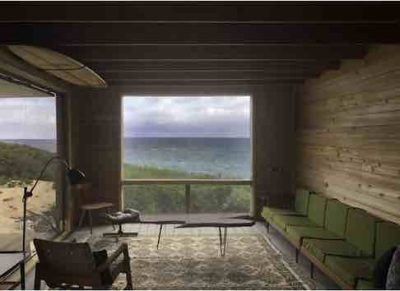 The only real unifying factor is location; these are houses without access to traditional services or facilities, and are said to have a special and intense relationship with their surroundings.
Although you would be forgiven to think that many of them turn their back on the surroundings and simply serv to inflate the ego of the architects, the likes of Brillhart or Cohesion studio,, whose creation could have appeared literally anywhere in the US, but happens to be in the iconic Joshia Tree area – where passing LA journalists might choose to puff the firm up a little.…

 The United States, with its vast and diverse landscapes, offers several states where off-grid living is more accessible and encouraged. Here are the top states that foster an environment conducive to off-grid life.
Nestled in the arid Southwest, Arizona boasts abundant sunshine, making it an ideal hub for solar power. Its vast rural areas offer relatively affordable land and, in certain regions, lenient regulations that facilitate off-grid living. Communities in places like Apache County have embraced sustainable, off-grid lifestyles, encouraging like-minded individuals to join their ranks.
Similar to Arizona, New Mexico provides ample sunlight for solar energy and pockets of affordable land. Some counties, such as Taos, are known for their off-grid communities and more relaxed building codes, fostering a supportive environment for those seeking a life disconnected from traditional utilities. Hundreds of square miles area around Alberqueue are dotted with off-grid ocmmunities
The Lone Star State’s huge acreage caters to all off-grid aspirations. Depite its arid climate – Texas combines vast expanses of land with fewer zoning regulations, especially in rural regions. Areas like Terlingua in West Texas have become hotspots for off-grid living, offering a balance between seclusion and community.
Oregon’s allure lies in its more liberal land use policies in certain areas and a generally supportive attitude toward sustainable living. While the state experiences ample rainfall on the western (Pacific Ocean) side of the state, it also features communities that embrace off-grid practices, particularly in counties like Josephine and Curry. The eastern side of the state boasts more arid land, which may have more challenges due to less rainfall overall.
For those seeking true isolation and a connection with untamed nature, Alaska stands as an enticing choice. Its remote and spacious landscapes beckon those looking for a complete break from mainstream living. While harsh winters can pose challenges, the state’s independent spirit and vast wilderness appeal to off-grid enthusiasts.
While these states offer favorable conditions for off-grid living, regulations and local ordinances vary significantly within each state. Before embarking on an off-grid lifestyle, thorough research on specific counties, land-use policies, water rights, and building codes is essential. Additionally, considerations about climate, access to resources, and community should factor into the decision-making process.
Off-grid living embodies a desire for independence, sustainability, and a closer connection to nature. Whether one seeks the arid deserts of the Southwest, the rugged terrains of Alaska, or the green landscapes of Oregon, these states provide opportunities for individuals or communities to forge their path toward self-reliance and off-grid freedom.
Do you live in any of these states? If so, do you live off-grid or want to live off-grid? Tell us about your experiences where you live. Leave comments or write to news@off-grid.net…

A MAN who gave up his normal life to live off the grid with his family has revealed how – and why – he did it.
Fraser, his wife Rachael and their children Grace and Albie stay in a patch of woodlands in Lancashire, UK. But the 4.5 acres of land was bare when Fraser managed to pull £15,500 together to buy it 18 years ago.
Fraser said: “Holding out for that perfect piece of land isn’t always feasible because there’s always someone there with a larger wallet than you – get something you can afford.
“Plant trees as quickly as you can, because it’s going to take a long time, then make it your paradise.”
He’s now living the dream after building a completely off-the-grid life for him and his young family. The dad-of-two says he was just 22 and living at home in council housing when he scraped the money together – and hasn’t looked back since.
He’s left behind the noisy neighbours and ended up running his own YouTube channel named The Off Grid Family, encouraging others to take the leap, too.
Recalling almost 20 years ago, Fraser said: “I was living at home, living on a council housing estate. The area was a bit rough, and you’ve got noisy neighbours and all those things that come with it.”
He said house prices were through the roof – even for back then – so he started up a business in tree surgery to try get some funds together.
Fraser continued: “My passion was growing trees and having nature around me. You couldn’t get a mortgage for land. I had to get a personal loan. The land was £15,500 for 4.5 acres – it was an awful lot of money for me.
“The only way I managed to do it really was because I was still living at home. There was no inheritance and there was no trust fund.
“People think you can’t get this without help… you can. I went to work and in the beginning was working six days a week.”
At the beginning he just planted trees on the land and used it as storage – which is called “agroforestry”.
He’s since planted thousands of trees, a massive bar, solar and water filtration system.
Fraser said: “It’s been a massive undertaking. We’re completely off the grid. We’ve got a family now living here and I suppose it’s called the good life. They’re quite fortunate really, we’ve broken the cycle, they’re not going to be on a housing estate, which is brilliant.”…

 The holiday season is upon us, and it’s time to spread some joy with heartfelt gifts. If you have friends or loved ones who embrace the off-grid lifestyle, why not consider DIY Christmas gifts that align with their sustainable and self-reliant way of living? Not only will these presents be unique and thoughtful, but they’ll also showcase your support for their chosen path. So, let’s dive into some creative and eco-friendly ideas that will make their off-grid Christmas truly special!
Personalized Herb Garden: Help your off-grid friends embrace their green thumbs by creating a personalized herb garden kit. Gather some small pots, organic soil, and a variety of herb seeds. Decorate the pots with hand-painted designs or personalized messages. This gift will not only add flavor to their culinary adventures but also serve as a beautiful reminder of your thoughtfulness.
Handmade Beeswax Candles: Nothing sets a cozy ambience quite like the warm glow of candlelight. Instead of store-bought candles, consider making your own using beeswax. Beeswax is a natural and sustainable material that emits a lovely, subtle fragrance. Melt the beeswax, pour it into molds of your choice, and add a cotton wick. Package the candles in reusable and recyclable materials for an eco-friendly touch.
DIY Natural Beauty Products: Encourage self-care with homemade natural beauty products. You can create simple yet luxurious items like lip balms, body scrubs, or bath salts using organic ingredients. Customize the scents and packaging to suit the receiver’s preferences. Not only will they enjoy pampering themselves, but they’ll also appreciate the effort you put into making something just for them.
Solar-Powered Phone Charger: Living off-grid often involves limited access to electricity. Help your loved ones stay connected by gifting them a solar-powered phone charger. This practical gift ensures that they can charge their devices even in remote locations, harnessing the power of the sun.
Upcycled Home Decor: Tap into your creativity and transform discarded materials into unique home decor pieces. For example, you can make a wall hanging using driftwood, seashells, and twine, or create a rustic photo frame using reclaimed wood. These upcycled gifts add a personal touch to their off-grid living spaces while reducing waste. Pinterest is your friend here!
This Christmas, celebrate the off-grid lifestyle by giving DIY gifts that reflect the values of sustainability, self-sufficiency, and creativity. From personalized herb gardens to handmade beauty products and solar-powered gadgets, there are endless possibilities to explore. These thoughtful presents will not only bring joy to your loved ones but also reinforce their commitment to living a more eco-friendly and fulfilling life. So, grab your crafting supplies, immerse yourself in the DIY spirit, and let your imagination run wild. Happy holidays filled with love, laughter, and sustainable gifting!…